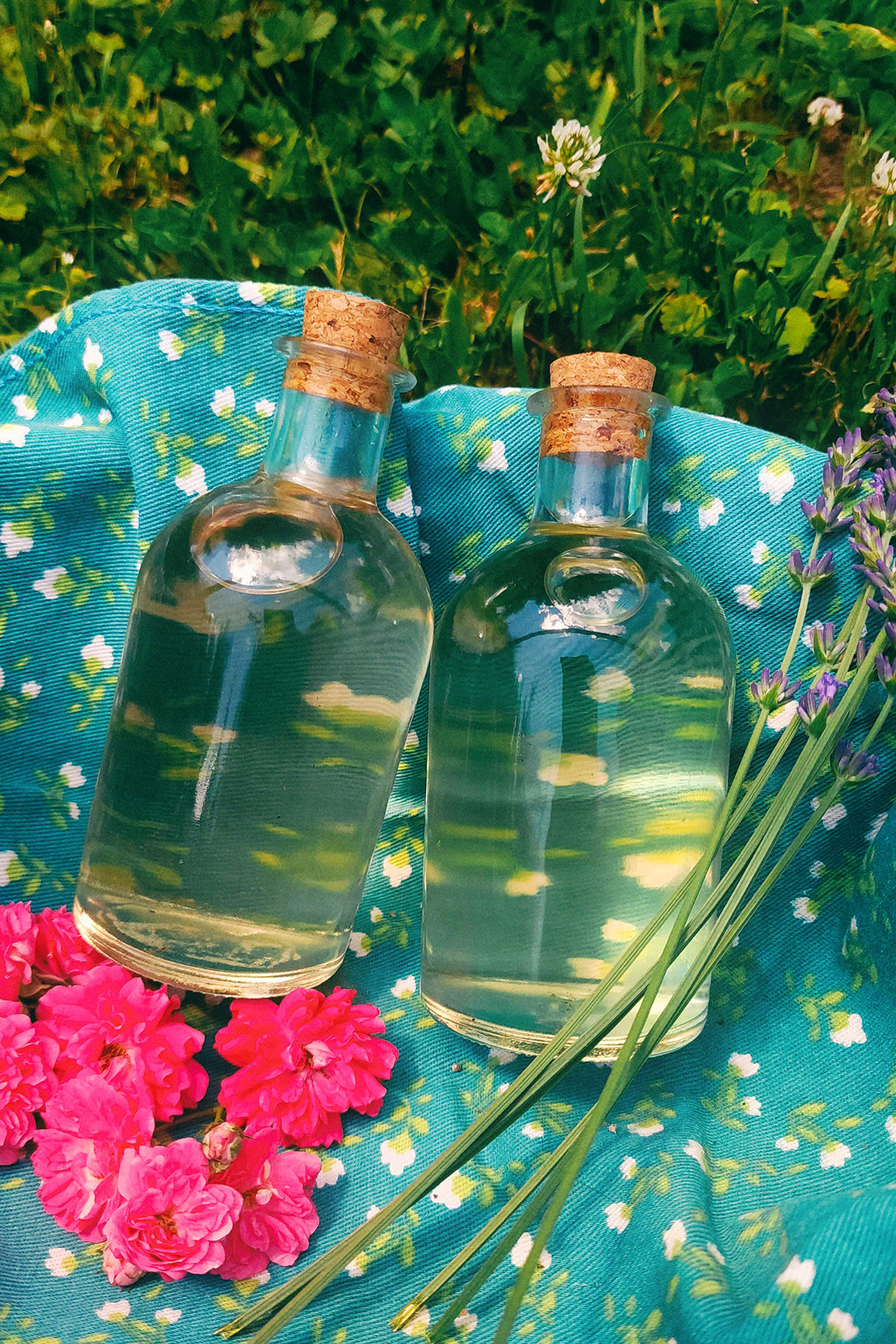

Learning how to make floral syrup is one of the sweetest ways to celebrate what is blooming in the garden. With a handful of edible flowers, sugar, and water, you can create a delicate homemade syrup for sparkling drinks, lemonade, tea, desserts, and summer gatherings.
In this post, we’ll cover the basic floral syrup method, safe edible flowers to use, helpful flower-to-sugar ratios, how to make rose and lavender syrup, simple floral drink ideas, and a few floral ice cubes for making your drinks feel especially beautiful.
For this batch, I used roses and lavender from my own untreated backyard. The lavender was still slightly early, with the buds just beginning to open, but that works beautifully for syrup. In many cases, lavender buds are actually best gathered before they are fully open, when the fragrance is still concentrated.
This felt less like a formal recipe and more like a small act of celebration. After all the time spent planting, tending, watering, pruning, and waiting, there is real joy in using what the garden has to offer.

What Is Floral Syrup?
Floral syrup is a simple syrup infused with edible flowers. At its most basic, simple syrup is made by gently heating sugar and water until the sugar dissolves. From there, flowers, herbs, fruit, or spices can be added to create different flavors.
The result is a sweet, fragrant syrup that can be stirred into sparkling water, lemonade, iced tea, cocktails, mocktails, desserts, whipped cream, yogurt, or even poured lightly over fruit.
Floral syrups are usually best when they are subtle. The goal is not to make a drink taste like perfume. It is to add a gentle garden note, something soft and fragrant enough to make an ordinary glass feel a little more beautiful.
Before You Begin: Use Safe, Edible Flowers
Before making any floral recipe, be sure you are using flowers that are safe to eat and that you can positively identify.
Only use blooms that are edible, untreated, and free from pesticides, herbicides, roadside runoff, or florist preservatives. Flowers from a conventional florist are usually not meant for eating. When in doubt, leave it out.
I used flowers from my own untreated backyard because I knew exactly where they came from and how they had been grown.
For this project, I used rose and lavender for the syrups. I also used rose, dianthus, yarrow, and lavender in the ice cubes. Yarrow is often treated as a medicinal herb, so I used it only decoratively in the ice cubes rather than as the main flavoring for the syrup.
Flowers I Used for This Batch

For the syrup itself, I made both rose syrup and lavender syrup, then used both in the finished drink.
Rose gives a soft, romantic, lightly floral flavor. It is gentle and easy to use, especially if you want something that feels pretty without being overpowering.
Lavender is stronger and more herbal. It can become intense quickly, so it is better to start with less and steep it gently. Lavender that is just about to bloom is still a good choice for syrup because the buds are fragrant before they fully open.
For the ice cubes, I used a mix of colorful and delicate blooms. The colorful cubes ended up showing best in the drink. The more subtle ones were lovely in the mold, but they disappeared a little once the drink was poured.
Basic Floral Syrup Recipe

This is the basic method I used. You can adapt it depending on the flowers you have and how strong you want the flavor to be.
Ingredients
- 1 cup water
- 1 cup sugar
- 1 to 2 cups loosely packed rose petals, or 2 to 3 tablespoons fresh lavender buds
- Optional: a small squeeze of lemon juice
Instructions
Add the water and sugar to a small saucepan. Warm gently over medium heat, stirring until the sugar dissolves. The mixture does not need to boil hard. A gentle heat is enough.
Remove the pan from the heat. Add the flowers, or pour the hot syrup over the flowers in a heat-safe bowl or jar. Cover and let the mixture steep.
Rose can usually steep a little longer because its flavor is softer. Lavender should be watched more carefully because it can become strong or soapy if left too long. Start tasting around 15 to 20 minutes and continue steeping until the flavor is where you want it.
Once the syrup tastes right, strain it through a fine mesh strainer into a clean jar. Let it cool, then store it in the refrigerator.


Rose Syrup
Rose syrup is a lovely place to begin if you are new to floral syrups. It is soft, sweet, and forgiving.
Use petals from fragrant, edible roses that have not been sprayed. The more fragrant the rose, the more flavorful the syrup will be. Remove any bitter white bases from the petals if needed, especially if your roses have a stronger taste.
For rose syrup, use:
- 1 cup water
- 1 cup sugar
- 1 to 2 cups loosely packed rose petals
Steep until the syrup has a gentle rose flavor. If you want a brighter flavor, add a small squeeze of lemon juice after straining.
Rose syrup is beautiful in sparkling water, lemonade, iced tea, simple desserts, and summer mocktails.
Lavender Syrup
Lavender syrup is stronger than rose syrup, so it needs a lighter hand.
Use culinary lavender or lavender from an untreated garden. Buds that are just beginning to open work well because the fragrance is already present. Fully open lavender can still be used, but the flavor may be a little different.
For lavender syrup, use:
- 1 cup water
- 1 cup sugar
- 2 to 3 tablespoons fresh lavender buds
Steep gently and taste often. If the syrup begins to taste too strong, strain it right away.
Lavender syrup pairs beautifully with lemon, honey, berries, vanilla, cream, black tea, and sparkling water.
Floral Syrup Ratio Guide
Once you understand the basic method, floral syrup becomes easy to adapt. Most floral syrups begin with the same simple syrup base: 1 cup water and 1 cup sugar. From there, the amount of flowers depends on how strong, delicate, or fragrant the bloom is.
As a general rule, use more petals for softer flowers like rose or pansy, and less for stronger herbs and flowers like lavender.
For a 1 cup water + 1 cup sugar syrup base, you can use:
- Rose syrup: 2 cups rose petals
- Lavender syrup: 3 tablespoons lavender buds
- Pansy syrup: 1 cup pansy petals
- Carnation syrup: 1 cup carnation petals
- Orchid syrup: 1 ½ cups orchid petals
- Tulip syrup: 1 cup tulip petals
Only use flowers that are positively identified as edible, untreated, and safe for culinary use. With tulips especially, use only the petals, not the bulb, stem, or inner parts of the flower.
You can also adapt this with other edible garden flowers. Some recipes use 2 cups loosely packed fresh edible flowers for every 1 cup water and 1 cup sugar or honey. That works well for fragrant blends such as rose, lilac, violet, hibiscus, or flowering lavender stems.
For stronger individual flowers, these ratios are another helpful starting point:
- Elderflower: about 10 flower heads per 1 cup water
- Violet: about 3 cups violet flowers per 1 cup water
- Lilac: about 2 cups lilac florets per 1 cup water
- Rose: about 2 cups rose petals per 1 cup water
- Lavender: about 3 tablespoons lavender flowers per 1 cup water
Dried flowers are more concentrated, so you usually need less. A dried-flower syrup might use something closer to ¼ cup dried chamomile or calendula, or 2 tablespoons dried lavender or rose petals, with 1 cup water and sugar.
For a lighter, less traditional version, you can also make a floral infusion first by steeping edible flowers in hot water, then straining and sweetening it with honey or maple syrup to taste. This creates a softer syrup that is lovely in tea, lemonade, or sparkling water, though it may not keep quite as long as a classic sugar syrup.
Optional: Make Floral Ice Cubes

Floral ice cubes are not necessary, but they make the finished drink feel celebratory. They are especially pretty for garden gatherings, bridal showers, summer brunches, or any day when you want a simple drink to feel more special.
To make them, place small edible flowers or petals into ice cube molds, cover with water, and freeze. Smaller flowers and petals work best because they fit easily into the molds and are less likely to float awkwardly.

A note on sphere ice molds: I used round sphere-style ice molds for these (my first time using sphere molds), and they were a little trickier than standard ice cube trays. A few did not fill completely, and some had tiny nubs where extra water pushed out through the fill hole. I learned afterward that it helps to fill the molds very slowly, hold them over the sink while gently squeezing or tapping the silicone to release trapped air, and then top them off once the bubbles rise. For the clearest, fullest shape, set the mold on a flat tray before moving it to the freezer so it does not tilt.
For clearer ice, you can try using boiled and cooled water or filtered water, though homemade floral ice cubes will often still look a little cloudy. I did not mind that. The cloudy look felt soft and handmade, and once the cubes were in the drink, the flowers were still the main detail.
I found that the colorful cubes looked best in the finished glass. The more delicate flowers were pretty in the tray, but they were less noticeable once the drink was poured.
A Simple Floral Garden Spritz

This is the drink I made with the syrups. It is simple, sparkling, and very easy to adjust.
I used plain seltzer water, grenadine, ginger, and both rose and lavender syrup. The grenadine added most of the color, while the floral syrups added fragrance and a gentle garden flavor.
Ingredients
- Plain seltzer water
- 1 tablespoon rose syrup
- 1 tablespoon lavender syrup
- A splash of grenadine
- Fresh ginger slices or ginger syrup
- Floral ice cubes
- Optional garnish: lavender, rose, mint, lemon, or another edible flower
Instructions
Fill a glass with floral ice cubes. Add the rose syrup, lavender syrup, and a splash of grenadine.
For the ginger, you can use very thin fresh slices and let them sit in the drink for a few minutes. This gives a gentle warmth. For a stronger and more even ginger flavor, ginger syrup works better.
To make quick ginger syrup, simmer 1 cup water, 1 cup sugar, and ¼ to ½ cup thinly sliced fresh ginger for about 10 to 15 minutes. Remove from the heat, let it steep for another 10 minutes, then strain.
Once the syrup, grenadine, and ginger are in the glass, top with cold seltzer. Stir gently and garnish with a flower or sprig of lavender.

Simple Drink Ideas for Floral Syrups
Once you have a jar of floral syrup in the refrigerator, the easiest way to use it is in sparkling water, lemonade, iced tea, or simple garden mocktails. Floral syrups are usually strongest when paired with something bright, tart, or bubbly, which keeps the drink from tasting too sweet or perfumed.
Sparkling Lavender Lemonade
Lavender syrup is especially lovely with lemon. For a simple version, combine lavender syrup, fresh lemon juice, and sparkling water over ice. Several sparkling lavender lemonade recipes use this same basic balance of lavender syrup, citrus, and bubbles, with the syrup providing the sweetness and the lemon keeping the flavor fresh.
Rose Lemonade or Rose Limeade
Rose syrup can be stirred into lemonade or limeade for a soft, romantic drink. Start with a small amount of syrup, then add more to taste. Rose can become strong quickly, so it is better to begin lightly and build the flavor.
This would be beautiful with rose petals, mint, lemon slices, or floral ice cubes.
Blueberry Lavender Sparkler
For a deeper summer flavor, muddle a few blueberries with lemon juice, add lavender syrup, then top with sparkling water or ginger kombucha. Blueberry, lemon, and lavender are a common pairing because the fruit gives the drink body while the lemon keeps the floral syrup from feeling too heavy.
Hibiscus Rose Fizz
Hibiscus makes a vivid, ruby-colored base for floral drinks. You can combine cooled hibiscus tea or hibiscus syrup with rose syrup, citrus, and sparkling water. Hibiscus pairs well with orange, lemon, lime, ginger, and rose, and it gives mocktails a richer color than many lighter floral syrups.
Floral Iced Tea
Stir a spoonful of rose, lavender, violet, or hibiscus syrup into black tea, green tea, chamomile tea, or mint tea. Serve over ice with lemon, fresh herbs, or a few edible flowers. This is one of the easiest ways to use up a small amount of syrup without making a full pitcher of lemonade.
Garden Party Pitcher
For a simple gathering drink, combine sparkling water, lemon juice, and floral syrup in a pitcher shortly before serving. Add berries, citrus slices, herbs, or floral ice cubes. Keep the syrup amount modest at first, then let guests add more to their own glasses if they prefer a sweeter drink.
Other Ways to Use Floral Syrup

Once you have a jar of floral syrup in the refrigerator, there are many ways to use it.
Stir it into sparkling water for an easy garden soda. Add it to lemonade or iced tea. Drizzle a little over berries, peaches, yogurt, or vanilla ice cream. Use it to sweeten whipped cream or brush it over a simple cake. You can also add a spoonful to cocktails or mocktails when you want something softer and more seasonal than a standard sweetener.
You can also use floral syrup in simple glazes and frostings. I used magnolia syrup in the frosting for this cake, and while mine came out closer to a thin glaze because I rushed the process, the flavor was still delicate and lovely. If you want a thicker frosting, add the syrup gradually and adjust the texture with powdered sugar, softened butter, cream cheese, or cream as needed.
A Note on Garden Gatherings
Floral syrups are especially lovely if you are hosting outdoors. They can be made ahead of time, stored in the refrigerator, and brought out when guests arrive. Set out sparkling water, citrus slices, herbs, floral ice cubes, and a few syrups, and guests can make their own garden drinks.
For more edible flower ideas, you may also like How to Host a Garden Gathering With Edible Flowers. And if you are planning a seasonal gathering, you may enjoy 15 Beautiful Garden Gathering Ideas for Early Summer and A High Summer Garden Gathering: 18 Beautiful Ways to Gather Outdoors.
Final Thoughts
Making floral syrup is a simple way to enjoy the garden in a different form.
It does not need to be perfect. The ice cubes can be cloudy. The petals can float unevenly. The syrup can be adjusted by taste. That is part of the charm.
For me, this was a way to use what my garden was already offering. The roses, lavender, dianthus, and yarrow became something more than a pretty view. They became part of a drink, part of a summer afternoon, and part of the small, ordinary pleasure of tending a home and garden with care.
If you want to preserve flowers in more lasting ways, I shared more detailed methods in How to Preserve Flowers: Choosing the Best Method for Every Bloom.
Leave a Reply