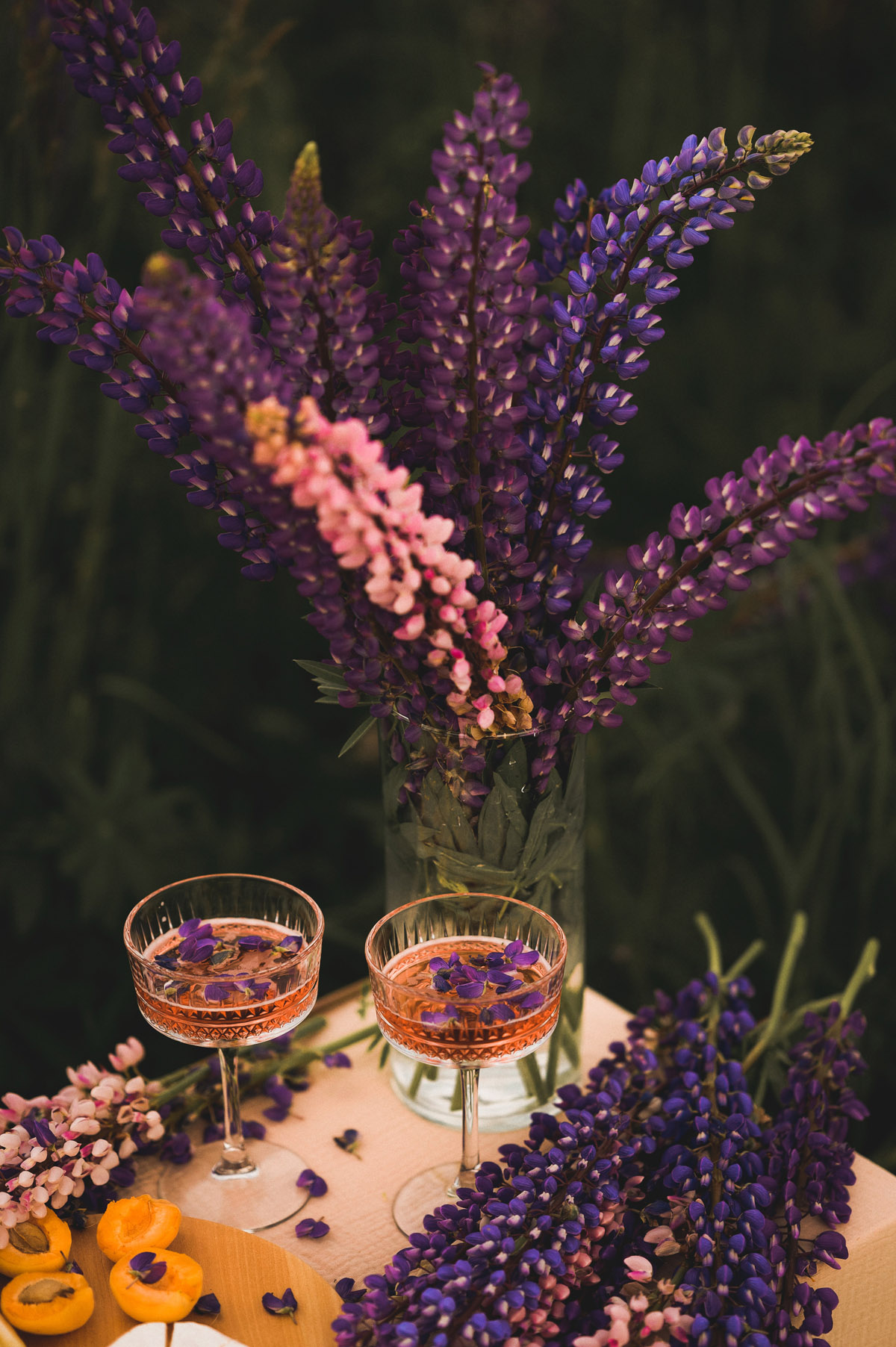

There is something especially lovely about bringing flowers into a gathering in ways guests can experience rather than simply admire.
Edible flowers can add color to a cake, fragrance to a drink, peppery brightness to a salad, or a sense of delight to an otherwise simple tray of food. Fresh flowers can also shape the atmosphere through loose arrangements, flower bars, botanical activities, glowing evening displays, and small details carried throughout the garden.
A flower-centered gathering can be as simple as lemonade and cake beneath a tree or as layered as a full garden meal with floral drinks, edible garnishes, activities, and lantern-lit decorations. The flowers provide a natural theme, but the gathering should still feel easy enough for both the host and guests to enjoy.

In The Art of Gathering at Home: Simple Ways to Make People Feel Welcome, we explored the importance of comfort, attentiveness, and preparing for guests’ needs ahead of time. This post builds on that foundation with practical ways to create a garden gathering inspired by edible flowers.
You do not have to grow a field of flowers or prepare an elaborate menu. Choose a few ideas that fit your time, garden, and budget, then let the season provide the rest of the beauty.
1. Choose a Simple Floral Direction

Begin by choosing a flower, flavor combination, or loose color palette to guide the gathering.
You do not need to use the same flower in every drink, dish, and arrangement. A general direction simply helps the different elements feel connected.
Possible floral themes include:
- rose and strawberry
- lavender and lemon
- violet and blueberry
- chamomile and peach
- hibiscus and orange
- elderflower and cucumber
- lilac and lemon
- calendula and citrus
- nasturtium and garden herbs
- borage and cucumber
- rose, raspberry, and mint
- lavender, blackberry, and lemon
- chamomile, honey, and apricot
- pansy and mixed berry
- basil blossoms, tomato, and soft cheese
- butterfly pea flower and lemon
- butterfly pea flower, blueberry, and lime
- butterfly pea flower, coconut, and citrus
- magnolia, ginger, and lemon
- magnolia and pear
- magnolia, rhubarb, and citrus
You might choose soft pink flowers with berries and rose tea, bright calendula and nasturtiums with a garden lunch, or lavender and lemon for a shaded summer afternoon.
One or two repeating details are usually enough. A floral drink, a vase of matching flowers, and a dessert decorated with petals can carry the theme without making the gathering feel overdesigned.
2. Begin With Flowers That Are Safe to Eat

Before choosing flowers for drinks, desserts, or table garnishes, it helps to know how their flavors differ. This beginner’s guide to edible flowers by flavor explores sweet, peppery, herbal, citrusy, and spiced blooms, along with simple safety and preparation tips.
Edible flowers require more care than flowers used only for decoration.
Use flowers that have been correctly identified and are known to be edible. They should be grown without pesticides or other treatments that are not intended for food crops. Flowers from conventional florist bouquets, garden centers, roadsides, or unknown yards should not be placed directly on food.
Even flowers from an edible species may have parts that are bitter or unpleasant. Depending on the flower, you may want to remove stems, leaves, sepals, stamens, or the pale base of the petals before serving.
Introduce flowers in modest amounts, especially when guests may be unfamiliar with them. It is also thoughtful to tell guests which flowers have been used and to provide plenty of foods and drinks without floral ingredients.
Examples of edible flowers and blossoms include:
- roses
- violas
- pansies
- violets
- nasturtiums
- calendula
- bachelor’s buttons
- borage
- chamomile
- lavender
- hibiscus
- elderflowers
- dianthus
- lilacs
- dandelions
- orchids sold specifically for culinary use
- squash blossoms
- daylilies, when correctly identified as edible
- marigolds from an edible variety
- apple blossoms
- chive blossoms
- basil blossoms
- dill flowers
- mint flowers
- thyme flowers
- rosemary flowers
- sage blossoms
- arugula flowers
- pea flowers from edible garden peas
- butterfly pea flowers, sold or grown specifically for culinary use
- magnolia petals from a correctly identified, untreated edible species
- Magnolia is another beautiful spring option. Its petals can have a warm, gingery flavor and may be turned into cordial, syrup, sugar, tea, or pickles. Because magnolias usually bloom earlier than many summer gatherings, preserving the petals in spring allows their flavor to return to the table later in the season.
Never assume a flower is edible because it looks similar to one on a list. Confirm the exact plant and variety before serving it.
3. Source the Flowers Early

If you grow edible flowers, make a rough list of what is likely to be blooming near the date of the gathering. Weather can change the timing, so it helps to have a backup plan.
Edible flowers may also be available through:
- local farms
- farmers markets
- specialty grocers
- herb growers
- edible-flower farms
- specialty produce suppliers
- catering suppliers
- online culinary-flower retailers
Online selections may include familiar flowers such as pansies, violas, roses, calendula, and nasturtiums, along with less common options such as orchids, borage, dianthus, bachelor’s buttons, and mixed edible-flower assortments.
Order early enough to leave room for delivery delays, but not so far ahead that the flowers lose their freshness. Read the supplier’s shipping and storage guidance before choosing a delivery date.

When the flowers arrive, inspect them, remove anything damaged, and refrigerate them promptly if the supplier recommends refrigeration. Keep them protected from crushing and excess moisture until you are ready to use them.
If the flower variety you wanted is unavailable, let the menu shift with what is fresh. A gathering built around the season will often feel more natural than one built around forcing a particular bloom.
4. Welcome Guests With a Floral Drink

A floral drink is one of the easiest ways to introduce the theme.
You could serve one prepared drink or create a self-serve floral mocktail bar with a simple menu. Set out glasses, ice, garnishes, sparkling waters, juices, and a few flavored syrups so guests can build their own drinks.
For a simple garden drink idea, you might also enjoy How to Make Floral Syrup, which shows how to turn edible flowers into rose, lavender, and other floral syrups, how to make floral ice cubes, and a sparkling summer drink.


Possible bases include:
- plain sparkling water
- lemon or lime seltzer
- tonic water
- ginger ale
- lemonade
- iced tea
- hibiscus tea
- white grape juice
- apple juice
- cranberry juice
- pineapple juice
- grapefruit juice
- peach nectar
Possible syrups and flavorings include:
- rose syrup
- lavender syrup
- violet syrup
- hibiscus syrup
- elderflower cordial
- lilac syrup
- chamomile-honey syrup
- mint syrup
- basil syrup
- rosemary syrup
- lemon simple syrup
- berry syrup
Possible garnishes include:
- edible flower petals
- whole violas or pansies
- rose petals
- lavender sprigs
- mint
- basil
- rosemary
- cucumber ribbons
- citrus slices
- fresh berries
- frozen berries
- herb blossoms
A small printed or handwritten menu can give guests a few combinations to try:
Rose Garden Fizz
Sparkling water, rose syrup, strawberry slices, and mint
Lavender Lemon Sparkler
Lemon seltzer, lavender syrup, fresh lemon, and a lavender sprig
Hibiscus Sunset
Chilled hibiscus tea, orange juice, sparkling water, and an orange slice
Elderflower Cucumber Cooler
Elderflower cordial, cucumber, lime, and plain seltzer

Violet Berry Spritz
Violet syrup, blueberry or blackberry juice, lemon, and sparkling water
Chamomile Peach Cooler
Chilled chamomile tea, peach nectar, honey, and lemon
Butterfly Pea Lemonade
Butterfly pea flower tea, lemonade or fresh lemon juice, sparkling water, and a citrus garnish

Butterfly pea flower tea creates a deep blue drink that shifts toward purple or pink when lemon or another acidic ingredient is added, making it especially memorable for a self-serve mocktail bar.
Strawberry Rose Shrub Soda
Strawberry-and-rose shrub, chilled sparkling water, fresh strawberries, and mint
You could also purchase ready-made floral mocktails or botanical sparkling drinks and serve them over ice with fresh herbs, citrus, berries, or edible flowers.

Be careful not to make every drink intensely floral. Floral flavors are often best when balanced with citrus, berries, herbs, tea, or sparkling water.
Offer an Old-Fashioned Floral Shrub
For an old-fashioned botanical soda, serve a floral or fruit-and-flower shrub. A shrub is a sweet-tart concentrate traditionally made with fruit, sugar, and vinegar. Diluted with chilled sparkling water, it becomes a bright, refreshing drink with more depth than an ordinary soda.
Possible combinations include:
- strawberry and rose
- blueberry and lavender
- peach and chamomile
- raspberry and violet
- hibiscus and orange
- elderflower and cucumber
- magnolia, pear, and ginger
- rhubarb and rose
- blackberry and thyme flower
Set out the shrub beside sparkling water, ice, fruit, herbs, and edible flower garnishes so guests can adjust the strength to their own taste. A small menu card can suggest combinations and help the drink station feel intentional without requiring a bartender.
5. Make a Floral Syrup

A floral syrup can become one of the most versatile elements of the gathering.
Depending on what is available and safely identified, floral syrups can be made with:
- violets
- roses
- lavender
- lilacs
- elderflowers
- hibiscus
- chamomile
- dandelions
- forsythia blossoms
- honeysuckle from a confirmed edible species
- butterfly pea flower
- magnolia
Use floral syrups in:
- sparkling water
- lemonade
- iced tea
- mocktails
- cake glaze
- frosting
- whipped cream
- fruit salad
- yogurt
- ice cream
- berry compote
- simple desserts

You could make one syrup ahead of time and place it in a pretty bottle beside sparkling water and citrus. Guests can add as much or as little as they like.
A small tasting station with two or three syrups would also be a memorable part of the gathering. Label each bottle clearly so guests know what they are trying.
6. Build a Menu Around Simple Floral Touches

The entire meal does not need to taste like flowers.
Often, the most appealing approach is to prepare familiar foods and add floral ingredients in a few intentional places. One floral drink, one savory dish, and one dessert may be more enjoyable than trying to add flowers to everything.
Savory ideas include:
- a green salad with nasturtiums, calendula, violas, or herb blossoms

- goat cheese topped with herbs and edible petals
- soft cheese decorated with pansies or rose petals
- flower-and-herb butter served with bread

- cucumber sandwiches with borage flowers
- tea sandwiches decorated with small edible blossoms

- flatbread with herbs, soft cheese, and edible flowers
- crostini with ricotta, honey, herbs, and petals
- deviled eggs topped with tiny herb blossoms
- Bake a garden focaccia topped with edible flowers, herbs, and thinly sliced vegetables arranged like stems, leaves, and blossoms. It can serve as both bread and a decorative centerpiece for the table.

- Floral windowpane cookies with translucent candy centers and pressed edible flowers
- Windowpane cookies can be especially beautiful for a garden gathering. The clear candy centers catch the light, while small pressed edible flowers create the look of tiny botanical stained-glass windows. You can mention them as inspiration without including a full recipe, or link to a tested recipe later if you create one.
- berry and soft-cheese toast topped with edible blossoms

- pasta salad with basil, chive, or arugula flowers
- tomato salad with basil blossoms
- garden vegetable trays decorated with edible flowers
- squash blossoms filled with seasoned cheese

- herb and flower compound butter
- savory crackers or biscuits with edible petals pressed on top
- pickled magnolia petals
- fresh spring rolls with edible flower petals arranged against the translucent rice paper
- Fresh spring rolls can be especially beautiful for a flower-centered gathering. Arrange edible petals, herb leaves, or small blossoms close to the outer edge before rolling so they remain visible through the translucent rice paper. Fill them with crisp vegetables, herbs, noodles, tofu, or another simple filling, then serve them with a dipping sauce as a light, easy-to-hold garden appetizer.


- naturally colored fresh pasta made with separate pink, green, yellow, or purple doughs, using natural dye options such as beetroot, spinach, turmeric, tomato, or butterfly pea flower, then shaped into bows, ribbons, or other decorative forms
- flower- and herb-laminated pasta, made by pressing culinary petals and tender herbs between two thin sheets of dough before rolling and cutting, with the dough itself optionally tinted using natural dye ingredients for additional color and visual interest
- Fresh pasta can become part of the floral theme in more than one way. Naturally colored doughs can be layered or combined while still keeping their colors distinct, creating striped bows, ribbons, or patterned shapes. For a more literal botanical effect, edible petals and soft herbs can be laminated between thin sheets of pasta dough so their shapes remain visible after rolling. Serve either version with a light sauce that allows the color and detail to remain part of the presentation.

Sweet ideas include:
- rose cake
- lavender shortbread
- violet cookies
- floral sugar cookies

- elderflower cake
- chamomile cake
- lemon cake decorated with violas
- strawberry shortcake with rose petals
- rose-flavored homemade marshmallows

- berry tart topped with edible flowers
- panna cotta with floral syrup
- cupcakes decorated with pansies
- scones with lavender or rose
- flower-topped/infused-glazed cinnamon rolls

- macarons with floral fillings
- floral jelly or jam
- honey cake with chamomile
- ice cream topped with petals

- fruit salad with mint flowers
- chocolate bark with dried edible petals

- candied violets
- rose-flavored whipped cream
- cake or glaze flavored with magnolia syrup
- flower-topped doughnuts

Floral pantry ideas include:
- rose sugar

- lavender sugar
- violet sugar
- magnolia sugar
- floral honey

- rose salt
- calendula salt
- herb-and-flower butter
- floral vinegar
- flower-infused syrup
- dried floral tea blends
Use a restrained hand with strongly flavored flowers such as lavender and rose. The goal is usually a gentle botanical note rather than perfume-like intensity.
7. Decorate Food Trays With Edible Flowers

Edible flowers can make a simple serving tray feel abundant and seasonal.
Use them to decorate:
- fruit platters
- cheese boards
- dessert trays
- tea sandwich trays
- vegetable platters
- cake stands
- cookie plates
- bread baskets
- butter boards
- soft cheese
- salads
- drink stations
- pitchers
- bowls of berries
- individual desserts
Whole small flowers such as violas can be tucked between pieces of fruit or placed beside desserts. Larger petals can be scattered around the edges of a tray. Herb flowers can be especially useful for savory foods because they visually connect the garnish to the flavor.
Keep flowers away from areas where they may become soaked, crushed, or mixed into food unintentionally. Add delicate blooms shortly before serving so they remain fresh.
If decorative flowers are not edible, keep them physically separate from the food and make it clear that they are for display only.
8. Freeze Flowers Into Ice or Create a Floral Ice Ring

Flowers frozen into ice can add color to drinks without requiring much preparation during the gathering.
Use small edible blossoms or petals in:
- individual ice cubes
- large slow-melting cubes
- ice spheres
- punch-bowl ice rings
- chilled serving bowls
- decorative ice buckets

A floral ice ring may be more practical for a gathering than individual cubes because it lasts longer in a large drink dispenser or punch bowl. Combine flowers with citrus slices, berries, herbs, or cucumber for added color.
Prepare the ice well ahead of time. That way, it is ready when guests arrive and does not become an activity that ends after the gathering is already underway.

9. Use Flowers Throughout the Gathering

A flower-centered gathering can extend well beyond the table.
Possible decoration ideas include:
- loose arrangements in pitchers and jars
- tiny bud vases scattered along the table
- single stems beside place settings
- flower-filled baskets near seating areas
- hanging jars with individual stems

- flowers tucked around lanterns

- petals scattered around the base of candleholders
- herbs and flowers tied around napkins
- a floral wreath or hoop
- a flower-covered welcome table
- arrange blooms and greenery around the drink station

- small vases in the bathroom or entryway
- flower garlands along a pergola
- fresh greenery woven around string lights
- faux flower garlands woven around overhead lights

- fairy lights loosely arranged around flower vases
- string lights suspended above flowers

- flower-filled bowls placed along a garden path
- a cluster of bottles holding single stems
- pressed-flower menus or signs
- Place a tapered candlestick into the top of a bottle (or few) with dried flowers inside for a simple detail that feels both romantic and a little old-world. A small amount of oil can give the arrangement a preserved, apothecary-style look, though it works beautifully without it too

- living centerpieces made with potted herbs and flowers
- place a flower on each napkin or plate of the table-setting for guests to keep

One of the easiest ways to make a limited number of flowers feel abundant is to divide them among many small vases rather than placing everything in one or two large arrangements. A single stem or a few flowers in each vessel can create a stronger sense of repetition and movement across the table.

Small bud vases are often sold online in mixed sets with different shapes, colors, and heights, but mismatched bottles, jars, and thrifted glassware work just as well. Scatter them along the table, drink station, windowsills, or garden path so the flowers appear throughout the gathering. This approach stretches a smaller flower budget while often creating more visual impact than one large bouquet.
For an evening gathering, fill a shallow bowl with water and float blossoms across the surface. Add floating tealights or battery-operated floating candles for a soft glow.

You could also place several flower-filled vases together and loosely weave fairy lights around them. Overhead, faux flower garlands can be intertwined with string lights to create the impression of a flowering canopy.
Keep open flames away from dried flowers, fabric, paper, garlands, and anything that may catch fire. Battery-operated candles are often the easiest option for tables where flowers and greenery are closely arranged.
10. Create a Potluck Flower Bar

A flower bar gives guests both an activity and something beautiful to take home.
Ask each person to bring a small bundle of flowers from their garden or a store-bought bouquet. Rather than keeping the bouquets intact, deconstruct them into buckets or jars so everyone can mix the flowers and create an arrangement of their own design.
You may want to provide:
- buckets or pitchers for sorting flowers
- garden snips
- jars, bottles, or small vases
- kraft paper
- twine or ribbon
- flower food
- tags or labels
- towels for spills
- a compost bowl for trimmings
The potluck approach creates more variety while keeping the cost from falling entirely on the host. One guest might bring roses, another greenery, another daisies, and another herbs or filler flowers.
Make it clear that flowers intended for bouquets do not need to be edible. Keep the bouquet-making flowers separate from any culinary flowers being used with food.
Guests can create a small arrangement for the table, wrap a bouquet to take home, or make a simple vase arrangement for a windowsill.
11. Add a Flower-Centered Activity

A gathering often feels more relaxed when guests have something optional to do with their hands.
Choose an activity that suits the length of the gathering, the number of guests, and the amount of preparation you want to do.
Seed, Plant, or Cutting Exchange

Set aside a small table where guests can bring:
- flower seeds
- herb seeds
- vegetable seeds
- seedlings
- rooted cuttings
- unrooted cuttings
- divided perennials
- small potted plants
- bulbs or tubers
- labeled envelopes of saved seed
Provide blank labels and pens so people can include the plant name, color, growing conditions, and any helpful notes.
Even guests who do not bring anything may enjoy looking, learning, or taking home a plant that someone has in abundance.
DIY Propagation Station

A propagation station can be inexpensive, practical, and surprisingly attractive.
Provide:
- small jars or bottles
- one sturdy stick or branch for each station
- twine
- labels
- scissors
- water
- easy-to-root plant cuttings
Guests can tie several small jars or bottles to a sturdy branch to create a simple wall-hanging display similar to a propagation station. It does require knowing how to secure the containers effectively with twine, so it may help to prepare a sample ahead of time or pre-tie part of the structure for guests.
Choose plants that are commonly propagated in water and label them clearly. Depending on what is available, possible cuttings might include mint, basil, coleus, pothos, tradescantia, scented geranium, or other easy-rooting plants.
The finished piece can be used as a propagation station for rooting cuttings, but it also works beautifully as a decorative display for single flowers, herb sprigs, or small bunches of delicate blooms. That flexibility makes it a memorable take-home project that guests can continue using long after the gathering.
Herbal and Floral Tea-Blending Station

Dried flowers and herbs are affordable, easy to portion, and less delicate than fresh flowers.
Offer small bowls of ingredients such as:
- chamomile
- culinary lavender
- rose petals
- hibiscus
- calendula
- mint
- lemon balm
- tulsi
- dried citrus peel
- cinnamon
- ginger
- dried berries
Provide small paper tea bags, jars, or envelopes so guests can create a blend to take home.
Label every ingredient, especially if anyone may have allergies, take medication, or need to avoid particular herbs.
Flower Crown or Floral Hairpiece Station

Use flexible greenery, small flowers, floral tape, and wire to make simple flower crowns, hair combs, or small floral clips.
A full flower crown may take more supplies and time, while a small comb or clip can be finished more quickly.

Fresh flowers create a whimsical accessory for the gathering itself, but they are highly temporary and are best viewed as part of the occasion’s fleeting fun. For guests who would like something longer-lasting, dried flowers are often a better choice and can create beautiful keepsakes.
Mini Floral Wreaths

Use small wire or grapevine wreath forms with dried flowers, herbs, seed heads, and greenery. Guests can create a delicate wreath to hang on a cabinet, door, chair, or wall.
While fresh materials can be used, dried flowers generally produce a longer-lasting finished piece and are often the better choice for a take-home craft.
Flower Pounding
Fresh petals and leaves can be transferred onto paper or fabric by arranging them on the surface, covering them, and gently pounding them with a small hammer or mallet.
This activity needs a firm work surface and some preparation, but it gives guests time to experiment and creates a finished piece they can take home.
Pressed-Flower Projects

Pressed-flower cards, bookmarks, tags, framed pieces, or candle wraps can be beautiful gathering activities, but the flowers need to be pressed and fully dried ahead of time.
You can press your own flowers several weeks before the gathering or purchase dried pressed flowers online. Set out glue, paper, cardstock, bookmarks, frames, or clear self-adhesive sheets for guests to use.
Botanical Bottles

Guests can create botanical bottles in either a small keepsake size or a larger decorative version.
Fill clear glass bottles or jars with fully dried flowers, herbs, seeds, seed heads, or other small botanical materials, then add clear mineral oil. Fresh flowers contain moisture and are more likely to discolor, break down, or make the oil cloudy, so thoroughly dried materials are the better choice for this craft.
Mini botanical bottles are inexpensive, require only a small amount of plant material, and make charming take-home keepsakes. Tiny bottles can be fitted with corks and turned into necklaces, hung with ribbon or twine, displayed as small ornaments, or simply placed on a shelf, windowsill, or desk.

Larger botanical bottles or jars require more oil and dried flowers, but create a fuller decorative display. They can look especially beautiful near a sunny window, where the light passes through the glass and reveals the shapes and colors inside.
Provide supplies such as:
- small bottles and larger decorative jars
- fully dried flowers, petals, herbs, seeds, and seed heads
- clear mineral oil
- tiny funnels
- tweezers or wooden skewers
- corks or secure lids
- ribbon, twine, chains, or necklace cords
- labels and pens
Guests could choose the size that suits them, or the host could offer mini bottles as the main activity and display one larger finished jar as inspiration.

Make Botanical Fresh Pasta Together

Fresh pasta is a wonderfully hands-on activity for a garden gathering. Mixing, rolling, decorating, cutting, and shaping the dough takes time, but the work becomes quicker and more enjoyable when several people take part. Because fresh pasta cooks in only a few minutes, guests can participate in the process and then sit down to eat what they helped create.
Prepare the basic dough ahead of time, or make several naturally colored doughs using ingredients such as:
- beetroot for pink or red
- spinach or fresh herbs for green
- turmeric or saffron for yellow
- tomato for orange-red
- butterfly pea flower for blue or purple
Guests can roll and combine the different doughs while keeping the colors distinct, then cut them into ribbons, bows, ravioli, or other decorative shapes.
For a more botanical effect, place culinary flower petals and tender herb leaves between two thin sheets of pasta dough. Roll the sheets together gently so the flowers remain visible inside the finished pasta. Small, flat petals and soft leaves work best, while thick stems and bulky flowers should be avoided.
Depending on the number of guests, you could organize the activity into simple stations:
- rolling the dough
- arranging edible petals and herbs
- cutting ribbons or shapes
- pinching farfalle
- filling and sealing ravioli
- laying finished pasta on floured trays
Serve the pasta with a light sauce, herb butter, olive oil, or a simple garden-inspired topping that allows the colors and botanical details to remain visible.
This activity takes longer than decorating a cookie or arranging a small vase, which makes it well suited to a gathering where people want to spend time creating something together. Guests become part of the meal rather than only being served it, and the shared process often becomes one of the most memorable parts of the day.
Edible-Flower Decorating

Set out plain cookies, small cakes, cupcakes, or individual soft cheeses with edible flowers, herbs, fruit, and simple frostings or glazes.
Guests can decorate their own food and eat it during the gathering or package it to take home.
Keep culinary flowers clearly separated from decorative bouquet flowers.
Herb-and-Flower Napkin Bundles

Provide cloth or paper napkins, twine, herbs, and sturdy flowers. Guests can create bundles to use at the meal or take home as inspiration.
Rosemary, thyme, lavender, sage, mint, and small blooms can work well, depending on what is available.
Botanical Sun Printing

Botanical sun printing can become a beautiful outdoor activity. Cyanotype paper usually develops quickly enough for guests to arrange flowers and leaves, expose their designs in sunlight, rinse them, and take the finished blue-and-white prints home. Turmeric printing offers a warm golden alternative, but it may need one to three hours of strong sun, so it works best for a longer gathering or with some steps prepared ahead of time.
12. Think About Timing, Temperature, and Freshness

Flowers are delicate, especially in summer heat.
Pick or receive them as close to the gathering as practical. Store them according to the grower or supplier’s directions and keep culinary flowers refrigerated until near serving time when appropriate.
Before using edible flowers:
- inspect them carefully
- remove damaged or wilted blooms
- shake out any insects
- rinse gently when appropriate
- dry them carefully
- remove unwanted stems or bitter parts
- keep them cool
- add delicate flowers shortly before serving
Keep flowers out of direct sunlight while the food is waiting to be served. Cakes, dairy-based dishes, cut fruit, salads, and prepared drinks also need appropriate temperature control.
It helps to prepare sturdier decorations and activities first, then add delicate edible flowers as one of the last steps before guests arrive.
13. Let the Flowers Support the Gathering

Flowers can bring a remarkable amount of beauty to a gathering, but they do not need to become another source of pressure.
Choose the ideas that give the greatest effect for the amount of time and energy you have.
You might serve one floral drink, place violas on a cake, and gather garden flowers in mismatched jars. You might create a full mocktail bar and bouquet station. You might invite guests to bring flowers, seeds, or cuttings so the gathering becomes an exchange rather than something created entirely by the host.
Leave room for people to wander, talk, taste, arrange flowers, compare plants, and contribute their own ideas. The most memorable part may be the bouquet someone creates, the cutting passed from one garden to another, or the discovery that a familiar flower has a flavor.
Let the Garden Become Part of the Gathering

An edible-flower gathering allows the garden to be experienced through color, scent, flavor, touch, and exchange.
A garden gathering with edible flowers is a way to savor the fleeting joys of summer with the people who matter most to us.
The flowers may appear in drinks, desserts, small bouquets, or simple activities, but they are not really the heart of the gathering. They help create the setting for something deeper: time spent outdoors, food shared slowly, hands busy making, and moments of laughter that might otherwise have passed unnoticed.
Edible flowers can also become the theme of a larger high-summer garden gathering or early summer garden gathering, appearing in salads, desserts, drinks, floral ice, and table details
You do not need an elaborate menu or armfuls of flowers. Begin with what is blooming, one beautiful thing to serve, and one small detail that invites people to participate.
Let the flowers add color. Let the garden offer its atmosphere. Then leave enough room for the gathering to become its own memory.