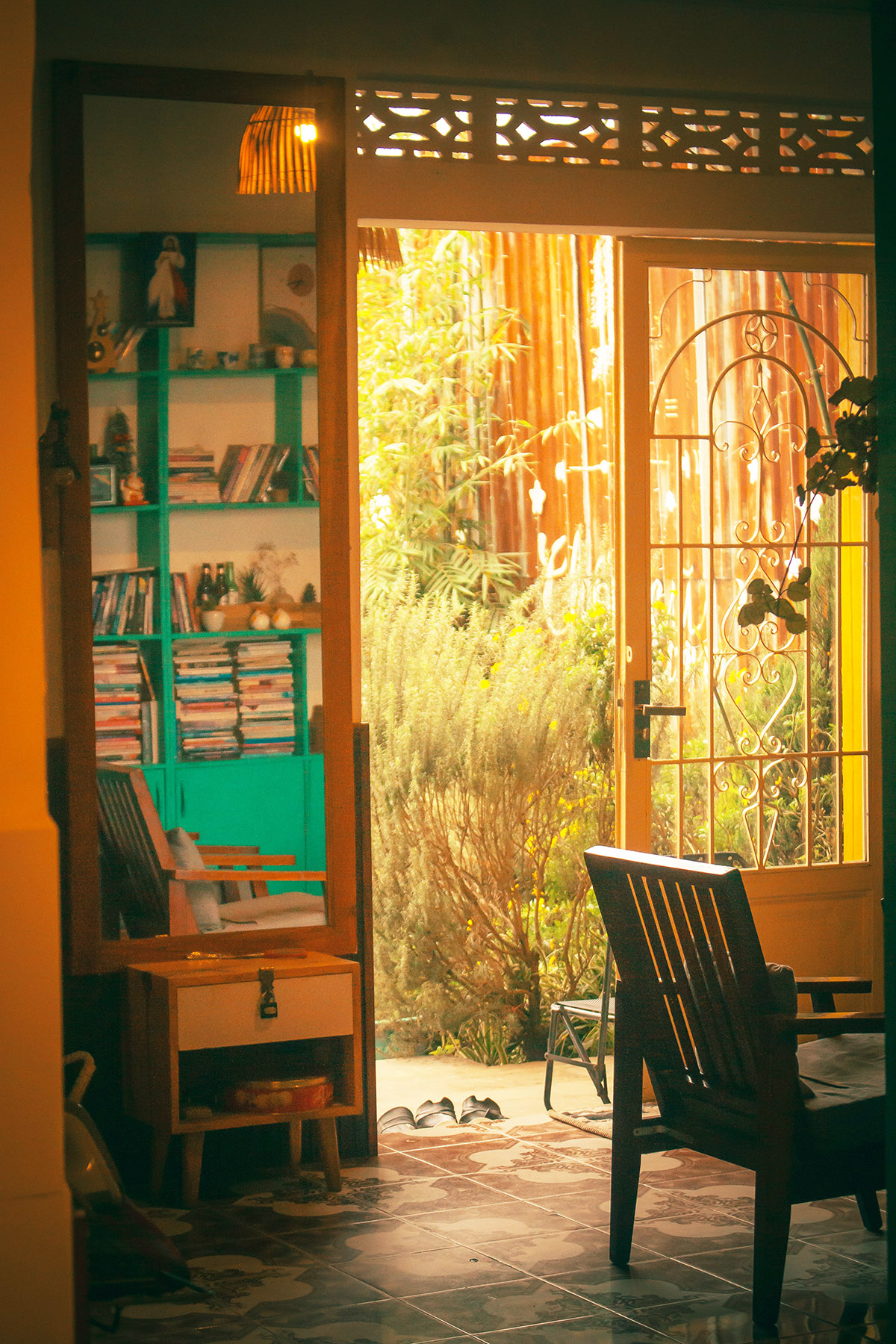

Our homes tell stories, with or without our conscious intent.
They speak of taste and temperament, habits and hobbies, love and loss, luck and laughter. They record the ordinary rhythms of our days and preserve traces of the chapters we have lived through. Even the things we try to hide can leave their imprint.
The home we create becomes a kind of private poetry in physical form.
Its language is not limited to written notes, signs, or labels. It is carried through the objects we keep, the colors we repeat, the images that draw us in, the materials we want to touch, and the shapes that seem to speak to something within us.

Imagery and pattern offer glimpses into the fancies, memories, and possibilities that move through our inner vision.
Color can express what colors us emotionally. A room may feel quiet, hopeful, sheltered, playful, dramatic, or restrained long before we have consciously named the feeling.
Texture communicates in another way. Hardness and softness, roughness and smoothness, polish and wear are physical qualities, but they also echo how we experience life. We may seek comfort, resilience, refinement, age, delicacy, or groundedness through the surfaces we choose.
Shape carries its own language. Curves may feel graceful, protective, fluid, or organic. Strong angles may suggest order, clarity, energy, or strength. The forms that appeal to us often reflect qualities we value, remember, or want to explore more deeply.
We do not always know why one doorframe, fireplace, chair, or towel rack feels more beautiful than another. Why does a particular curve, finish, material, or proportion capture our attention? Why do certain rooms feel immediately familiar, while others leave us untouched?

The answers are not always simple, but they are often meaningful.
Telling a more conscious story through the home begins with values: what we find beautiful, important, comforting, worthy of preservation, or worth growing toward. It develops through lived experience, memory, imagination, and the ideals we carry about what home could become.
The qualities we admire in people, animals, flowers, trees, landscapes, and objects often resemble qualities we recognize in ourselves, or in the person we hope to become.
Strength. Grace. Warmth. Freedom. Patience. Wildness. Resilience. Tenderness. Mystery.
Look at the things you repeatedly choose and ask:
Do you see a resemblance between the way you describe yourself, the qualities you value, and the things you bring into your home?
A home already contains a story. Conscious homemaking allows us to read it more closely, decide which themes deserve to be strengthened, and take greater care with what we write next.
Through greater attention to these choices, we can create a more personal and meaningful home.
If you are still identifying the visual qualities that feel most like you, A Home in your Own Words: Find Your Style Beyond Design Labels offers a practical way to turn mood, values, and personal preferences into a clearer design language.
Read the Story Your Home Is Already Telling

Before trying to tell a more intentional story, begin by noticing the one that is already present.
Walk through the home slowly and look at it as though you were visiting for the first time. Try not to judge whether it is stylish, finished, tidy, or impressive. Look instead for evidence.
What seems important here?
Which activities have been given room? What is easy to reach? What has been carefully preserved? Which objects appear repeatedly? What has been placed in positions of honor, and what has been hidden away?
A home might reveal:
- a love of books, music, gardening, cooking, or making
- a preference for comfort over formality
- attachment to family history
- curiosity about distant places or earlier eras
- an affection for animals, flowers, folklore, or art
- a need for calm, privacy, openness, or stimulation
- seasons of busyness, grief, creativity, change, or renewal
- values such as hospitality, beauty, usefulness, thrift, or care
It may also reveal areas where intention and reality have drifted apart.
A dining table intended for gathering may have become a place for unopened mail. Materials for a beloved hobby may be packed too deeply away to use. Objects kept from obligation may occupy the space where something more meaningful could live. A room may reflect an earlier chapter that no longer feels like the person inhabiting it now.
None of this makes the home a failure. It simply gives you something to read.
Notice the Themes That Repeat

Stories gain identity through recurring themes, and homes do too.
Look for repetitions in:
- colors
- shapes
- materials
- motifs
- artwork
- collections
- books
- furniture styles
- plants and natural objects
- handmade or inherited pieces
- signs of particular habits and rituals
You may notice that leaves, birds, stars, arches, flowers, circles, landscapes, or old buildings appear again and again. Perhaps you repeatedly choose curved furniture, weathered wood, deep green, brass, handmade pottery, or objects with visible age.
The repetition may not have been planned, but it often points toward something real.
Ask yourself:
- What do these recurring forms suggest to me?
- What qualities do I associate with them?
- What memories or aspirations do they carry?
- Do they make the home feel more like me?
- Which themes feel enduring, and which belong to a passing phase?
A repeated botanical motif might express more than an interest in flowers. It could represent growth, delicacy, abundance, resilience, seasonality, or connection with the living world.
An attraction to old objects may reflect nostalgia, but it may also express continuity, craftsmanship, patience, or the desire to belong to a story larger than the present moment.
Decide What You Want the Home to Say

Once you recognize the story already present, consider the one you want to strengthen.
This does not require inventing a theme or turning the home into a carefully staged statement. The aim is to clarify what matters enough to receive visible space and attention.
Ask:
- What do I want this home to communicate about the life lived here?
- Which qualities do I want people to feel when they enter?
- What do I want the home to remind me of each day?
- Which parts of my history deserve to remain visible?
- What am I growing toward now?
- What activities, relationships, and values need more room?
You might want the home to speak of:
- welcome
- creativity
- tenderness
- curiosity
- resilience
- play
- reverence for nature
- family continuity
- rest
- beauty in ordinary life
- thoughtful use of resources
- openness to growth
Choose a few qualities rather than trying to communicate everything at once.
A home centered on warmth, creativity, and connection with nature will tell a clearer story than one attempting to express twenty unrelated ideas equally.
Translate Values Into Visible Choices

Values become part of the home’s story when they are given physical form.
If hospitality matters, that might appear as comfortable seating, a welcoming entry, drinks that are easy to offer, and enough room for people to gather without ceremony.
If creativity matters, it may mean leaving tools accessible, displaying works in progress, keeping inspiration visible, or dedicating even a small surface to making.
If connection with nature matters, it could appear through plants, garden views, seasonal branches, natural materials, botanical artwork, and colors drawn from the surrounding landscape.
If memory matters, you might:
- frame an old letter
- display an inherited object
- preserve flowers from an important occasion
- label family photographs
- use a relative’s dishes
- keep a small collection connected with a meaningful place
- repair rather than replace an object whose history matters
If play matters, the home might include:
- an unexpected color
- whimsical artwork
- games kept within reach
- playful lighting
- objects that invite interaction
- room for music, craft, movement, or imagination
The question becomes less “What should I decorate with?” and more:
What visible choices would support the life and qualities I value?
Meaningful choices still need to work together visually and practically. How to See Your Home Like a Designer explores principles such as balance, proportion, movement, contrast, emphasis, and unity, which can help those personal choices feel more intentional within the room.
Choose Symbols With Greater Awareness

Not every object needs to carry a profound meaning. Some things can simply be useful, attractive, amusing, or convenient.
Yet becoming more aware of symbolism can help us make choices that feel personal rather than arbitrary.
When drawn to an image, object, pattern, or shape, pause and ask:
- What does this remind me of?
- Which quality does it embody?
- Is the attraction connected with a memory?
- Does it represent something I already value?
- Does it point toward something I want more of?
- How does it change the emotional tone of the room?
A tree may suggest rootedness, shelter, ancestry, patience, or growth. A bird may represent freedom, song, migration, perspective, or homecoming. A circle may feel protective, whole, harmonious, or continuous.
Your interpretation does not need to match a formal symbolic dictionary. Personal associations are often more important than universal ones.
Make Space for Contradiction

No meaningful story contains only one mood.
A home can be joyful and hold reminders of grief. It can be orderly in some places and creatively unruly in others. New objects can stand beside inherited ones. Practical necessities can coexist with romantic beauty.
These apparent contradictions often make a home feel more truthful.
You do not have to remove every object that fails to support a perfectly cohesive narrative. A child’s bright creation, a sentimental object that does not match, an awkward family heirloom, or evidence of a difficult season may belong because it carries part of the real story.
Conscious homemaking is not the creation of a flawless fictional identity. It is the thoughtful arrangement of a complex life.
Edit the Story Without Erasing It

Some parts of the home’s story may no longer deserve the emphasis they currently receive.
Editing can mean:
- moving an object to a quieter location
- grouping scattered keepsakes into one meaningful display
- photographing something before letting it go
- repairing an item so it can return to use
- removing decor chosen for a former version of yourself
- bringing a neglected object back into view
- clearing space for a new practice or relationship
- changing a room whose purpose no longer fits your life
Editing is different from erasure.
You can honor a past chapter without allowing it to define every room. You can keep the memory while changing its physical expression. You can acknowledge who you were while making room for who you are becoming.
Tell the Story Through Daily Life

The deepest story of a home is not told by decor alone.
It is told through repeated actions.
A table becomes associated with connection because people sit around it. A chair becomes a place of restoration because someone regularly reads there. A kitchen carries warmth because food is prepared and shared. A garden entrance becomes meaningful because it is passed through in every season.
Objects and rooms gather significance through use.
This means that telling a more intentional story may require changing a habit as much as changing a display.
You might:
- light the candles you have been saving
- eat at the table instead of beside a screen
- leave a sketchbook where it can be opened
- place flowers where you will actually see them
- create a place for evening conversation
- use the inherited serving bowl
- establish a small seasonal ritual
- invite someone into the home
- care for a neglected corner
The story becomes believable when it is lived.
Let the Home Remain an Ongoing Narrative

A home’s story is never fully finished.
People arrive and leave. Interests change. Objects are found, inherited, made, repaired, or released. Rooms take on new purposes. Seasons alter the light. The qualities we need from home change as we do.
The aim is not to reach a final, perfect version.
It is to become more conscious of the language already present and more deliberate about what is being written next.
Look at the colors, shapes, textures, objects, and habits that fill your rooms. Notice which qualities they express and which memories they carry. Decide what matters enough to make visible. Give physical form to the values you want the home to support.
Then allow the story to continue.
A home becomes personal through the choices we make, but it becomes meaningful through the life that unfolds among them.
Leave a Reply