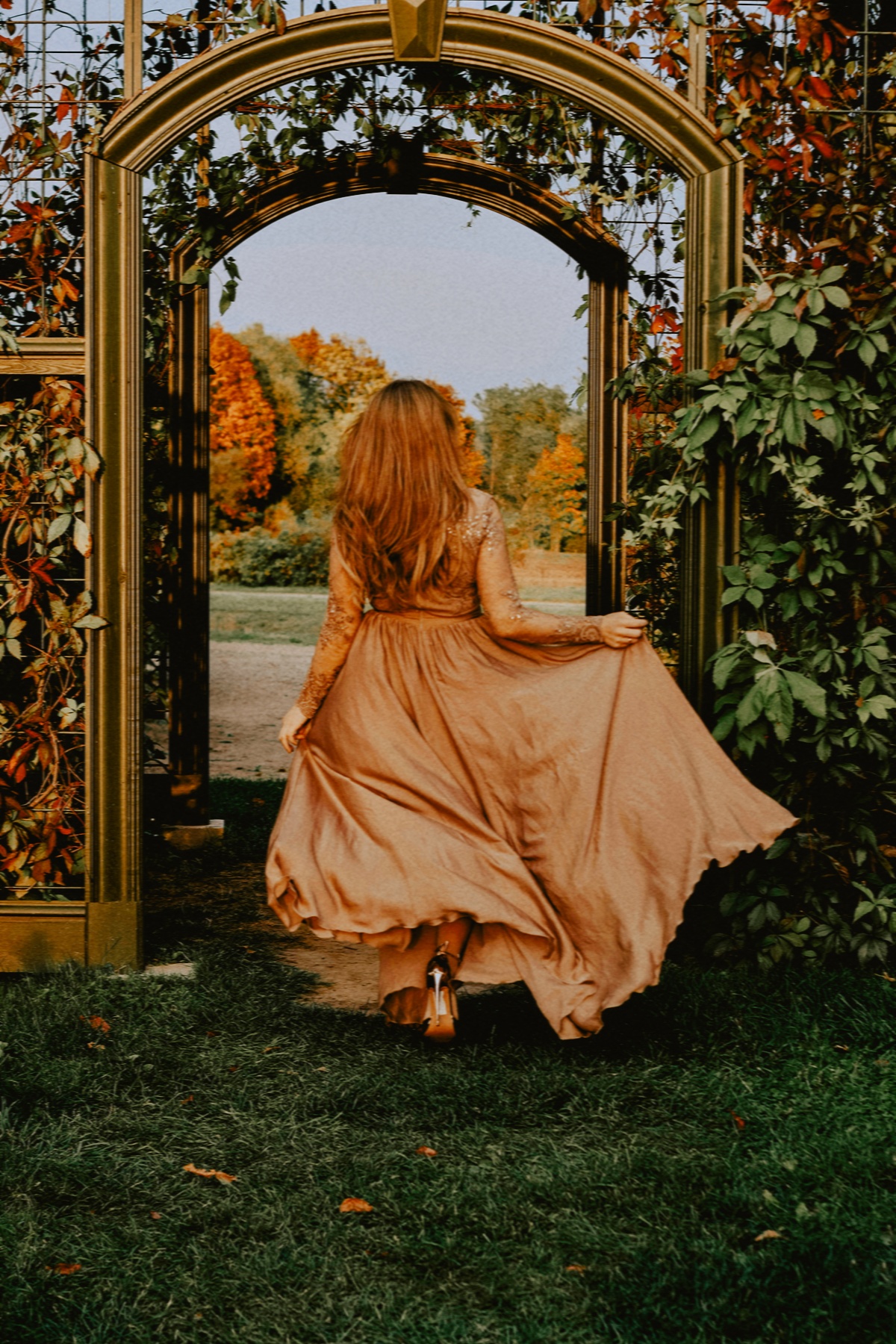

A garden entrance has a special kind of power.
Before we ever step into the garden itself, the entrance tells us that we are crossing into a different kind of space. It gives the eye somewhere to land, the body a clear place to move through, and the imagination a small invitation to wonder.
In 10 Ways to Create a Welcoming Front Door, we talked about making the outside of the home feel warm and inviting before anyone steps inside. InHow to Create a Welcoming Home Through Beautiful Transition Spaces, we looked at the importance of those in-between places that help us pause, shift, and arrive. And in 10 Beautiful Ways to Create a Warm and Inviting Entryway, we moved just beyond the threshold into the first interior space of the home.
A garden entrance works in a similar way.
It is a threshold between the ordinary and the enchanted. Between the open yard and the tucked-away place. Between daily tasks and a slower, greener rhythm.
Whether you are creating a romantic flower garden, a practical vegetable garden, a small herb garden, a fire pit area, or a secret little corner beneath the trees, the entrance can help define the space and make it feel more intentional.
And it does not have to be grand. A simple arbor, a handmade gate, a pair of planters, two large stones, or a narrow path between tall flowers can be enough to suggest: something begins here.
1. Start by Deciding What the Entrance Should Feel Like

Before choosing an arbor, gate, or pathway, it helps to ask what kind of feeling you want the garden entrance to create.
A vegetable garden entrance might need to feel sturdy, practical, and easy to move through with baskets, tools, and wheelbarrows.
A flower garden entrance might feel softer and more romantic, with climbing roses, clematis, or flowering vines.
A secret garden entrance might be partially hidden, with a curved path, layered shrubs, or a gate that only reveals part of what is beyond.
An herb garden entrance might feel old-world, useful, fragrant, and slightly apothecary-inspired.
A fire pit or social area might need to feel welcoming, open, and comfortable, like an outdoor room.
The entrance should match the purpose of the space. A garden used for daily food growing has different needs than a quiet sitting nook or a dreamy ornamental border. The magic comes from choosing details that support the way the space will actually be used.
2. Use an Arbor to Create a True Garden Threshold

An arbor is one of the clearest ways to create a garden entrance.
It gives height to the space, frames the view, and creates the feeling of stepping through a doorway. Even a simple wooden arbor can make a garden feel more established and intentional.
For a romantic garden, an arbor covered in climbing roses, honeysuckle, clematis, or flowering vines can create a soft, storybook feeling. For a kitchen garden or potager, a clean wooden arbor with simple lines can feel charming without getting in the way. For a more rustic space, an arbor made from branches, saplings, or rough-cut wood can feel natural and handmade.
The arbor does not need to be covered immediately to have impact. Young plants take time to grow. In the beginning, the structure itself creates the threshold. Over time, the vines and flowers make it feel even more settled into the landscape.
A few arbor ideas:
- A wooden arbor at the entrance to a vegetable garden
- A rose-covered arbor leading into a flower garden
- A rustic branch arbor for a woodland path
- A simple arched arbor between two raised beds
- A metal arbor for climbing vines in a cottage-style garden
- A handmade sapling arbor for a natural, informal entrance
If you want the entrance to feel magical, think about what the arbor frames. A path, a bench, a birdbath, a statue, a tree, or a glimpse of flowers beyond the entrance can make the view feel intentional.
3. Add a Gate for Charm, Function, and a Sense of Arrival

A gate brings a different feeling than an arbor alone.
A gate asks us to pause. We reach for the latch, open it, step through, and close it behind us. That simple action can make the garden feel more protected and special.
In practical gardens, gates also serve a real purpose. They can help keep out deer, dogs, chickens, children, or wandering visitors. In vegetable gardens, a gate may need to be wide enough for a wheelbarrow and sturdy enough to hold up to frequent use.
In ornamental gardens, a gate can be more decorative. A painted wooden gate, a vintage iron gate, a willow gate, or a simple picket gate can add character before a single flower is even in bloom.
For a secret garden feeling, the gate can be partially hidden by shrubs, vines, or tall perennials. It does not have to reveal everything at once. In fact, a little mystery often makes the entrance more inviting.
Beautiful gate ideas include:
- A white picket gate for a cottage garden
- A natural wood gate for a vegetable garden
- A wrought iron gate for a romantic or formal garden
- A willow or wattle-style gate for a handmade look
- A painted gate in sage green, deep blue, soft cream, or weathered red
- A vintage salvaged gate between two hedges or stone posts
A gate can be simple and still feel meaningful. The important thing is that it marks the garden as a place worth entering with intention.
4. Let the Path Lead the Way

A garden entrance feels more complete when it connects to a path.
The path does not need to be elaborate. It can be made of gravel, stepping stones, mulch, brick, grass, flagstone, wood chips, or even a mown strip through taller plantings.
A straight path creates clarity and structure. This can work beautifully in vegetable gardens, formal herb gardens, or potager-style layouts.
A curved path feels softer and more mysterious. It encourages slow movement and makes the garden feel larger because everything is not revealed at once.
For a magical garden entrance, consider allowing the path to narrow slightly at the entrance and then open into the garden. This creates a gentle feeling of passage, almost like stepping through a little green doorway.
Good path materials for different garden styles:
- Vegetable garden: gravel, mulch, wood chips, brick, or compacted paths
- Cottage flower garden: stepping stones, gravel, grass, or reclaimed brick
- Herb garden: brick, stone, gravel, or small pavers
- Woodland garden: wood chips, mossy stones, bark, or natural stepping stones
- Fire pit area: gravel, flagstone, pea stone, or a wider cleared path
A path gives the entrance purpose. It says, come this way.
5. Frame the Entrance With Plants

Plants can create an entrance even when there is no gate, arbor, fence, or wall.
A pair of shrubs, two large planters, tall grasses, flowering perennials, or matching small trees can frame a space beautifully. This is especially helpful when you are trying to define a garden area within an open yard.
For a soft, romantic entrance to a flower garden, patio, or more ornamental garden area, use plants that gently spill toward the path. Lavender, catmint, roses, foxgloves, hollyhocks, salvia, yarrow, echinacea, and delphinium can all help create a lush threshold that feels full, fragrant, and alive. The key is to let the planting feel abundant without allowing it to crowd the walkway or make the entrance difficult to use.
For an herb garden, fragrant and flowering medicinal herbs are especially lovely near the entrance. Lavender, chamomile, calendula, bee balm, echinacea, yarrow, anise hyssop, catmint, holy basil, sage, thyme, and lemon balm can turn the threshold into a place of scent, color, pollinators, and quiet usefulness. Rosemary can be grown in pots where winters are cold, and mint is best kept in containers so its abundance stays charming rather than overwhelming.
For a vegetable garden, plantings near the entrance can still be beautiful, and many of the prettiest choices are useful as well. Calendula, nasturtiums, marigolds, borage, dill, basil, chives, and other flowering herbs are often tucked into vegetable gardens because they attract pollinators, invite beneficial insects, add biodiversity, and may help make it harder for pests to find their favorite crops. Instead of treating the vegetable garden as purely practical, these flowers help it feel abundant, lively, and welcoming.
For a fire pit or social area, consider plants that create atmosphere without crowding the seating. Ornamental grasses, hydrangeas, roses, lilacs, evergreens, or tall perennials can help soften the edges and make the area feel more settled into the landscape. You can also layer potted plants in different sizes near the entrance or around the seating area. This gives you flexibility, especially in spaces where permanent planting beds are not practical. Pots can be moved when needed, refreshed as the seasons change, and filled with flowers, herbs, evergreens, or trailing plants for constant color and life.
The plants around the entrance should feel like a frame. It is not necessary for them to be perfectly symmetrical, but they should make the space feel marked, held, and cared for.
6. Create a Threshold Without a Fence

Not every garden has a fence, hedge, stone wall, or obvious boundary.
That does not mean it has to feel undefined.
If your garden is part of an open yard, you can create a sense of entrance with a few strong visual cues. The goal is to help the eye understand that this is a distinct area.
Ways to mark a garden entrance without a fence:
- Place two large planters on either side of the path
- Use a pair of shrubs or small trees as living gateposts
- Add two large boulders at the entrance
- Place a statue, birdbath, obelisk, or trellis near the opening
- Change the path material as you enter the garden
- Use a low border of herbs, flowers, stones, or edging
- Plant taller flowers on both sides of the entrance
- Add a small sign, lantern, or garden ornament
Large stones or boulders can be especially effective. They have a grounded, ancient feeling and can make even a simple garden bed feel more intentional. A pair of boulders on either side of a path can suggest a threshold without needing a built structure.
Statues and ornaments can also help mark the entrance. A rabbit statue, a small classical figure, a birdbath, a sundial, or a simple stone sphere can add personality and give the entrance a focal point.
This is where a garden can begin to feel enchanted without becoming complicated.
7. Match the Entrance to the Type of Garden
Different garden spaces call for different entrances.
A magical garden entrance should still make sense for the garden it leads into.
Vegetable Garden Entrances

A vegetable garden entrance needs to be practical first. You may be carrying harvest baskets, compost, tools, stakes, hoses, or soil amendments. If there is a gate, it should open easily and be wide enough for what you use most often.
But practical does not have to mean plain.
A vegetable garden entrance can be beautiful with a simple wooden arbor, a rustic gate, flowering companion plants, or a row of herbs along the path. A potager-style entrance can feel especially charming when usefulness and beauty are woven together. A potager is a traditional kitchen garden where vegetables, herbs, flowers, and paths are arranged with both practicality and beauty in mind, so the entrance might include a tidy gate, simple arbor, flowering companions, clipped herbs, or a gravel path leading into the beds.
Good details for vegetable garden entrances include:
- A sturdy gate
- A wide path
- An arbor for beans, peas,flowers, or other vining veggies
- Calendula, nasturtiums, borage, basil, or marigolds near the entrance
- A small tool hook, basket, or harvest station
- Simple signage or plant markers stored conveniently at-hand
Flower Garden Entrances

A flower garden entrance can be softer, fuller, and more romantic.
This is where climbing roses, clematis, honeysuckle, foxgloves, lavender, and overflowing borders can shine. The entrance might be an arbor, a gate, a path between tall flowers, or a narrow opening in a hedge.
A flower garden entrance can reveal the garden gradually. Let plants brush close to the path. Let the view be partly hidden. Let there be a little sense of discovery.
Herb Garden Entrances

An herb garden entrance can feel humble and old-world in the loveliest way.
Think brick paths, low borders, terracotta pots, wattle edging, lavender, thyme, sage, chamomile for scent, and a simple wooden gate. An herb garden can also have an apothecary feeling, especially if you include medicinal herbs, labeled plants, or a small bench. Plants that are invasive and need to be grown pots (such as mint) are good choices for flanking the entrance with.
Fragrance matters here. Place aromatic herbs where you will brush against them as you enter to enjoy on your many trips in and out.
Secret Garden Entrances

A secret garden entrance should hold back a little.
Instead of showing the whole space at once, create a partial view. Use a curved path, a gate tucked behind shrubs, an arbor covered in vines, or tall plantings that make the entrance feel slightly hidden.
A secret garden does not need to be large. Even a tiny corner can feel private if the entrance creates a sense of separation from the rest of the yard.
Fire Pit and Social Area Entrances

A fire pit, outdoor dining spot, or social area may not be a garden in the traditional sense, but it can still benefit from a beautiful entrance (and some beautiful plants!).
A pair of lanterns, a gravel path, large planters, a low stone border, or tall grasses can help the area feel like an outdoor room. The entrance should feel open enough for guests to move through comfortably, but defined enough that the space feels special.
8. Use Height to Make the Entrance Feel More Enchanting

Height is one of the easiest ways to make a garden entrance feel magical.
An arbor naturally adds height, but there are other ways to create the same effect. You can use obelisks, trellises, tall planters, shrubs, small trees, climbing vines, or even tall flowers.
Height helps create the feeling of enclosure. It draws the eye upward and makes the entrance feel more like a passage.
Beautiful ways to add height:
- Climbing roses on an arbor
- Clematis on a trellis
- Pole beans or scarlet runner beans over a vegetable garden arch
- Tall foxgloves or hollyhocks near a flower garden entrance
- Obelisks on either side of a path
- Potted evergreens flanking an entrance
- Willow branches woven into a simple arch
- Sunflowers or tall cosmos creating a seasonal doorway
For a handmade entrance, branches can be especially charming. A simple arch made from saplings, willow, birch poles, or gathered branches can feel rustic and poetic.
The structure does not have to be perfect. In a garden, a little irregularity often adds to the charm.
9. Add a Touch of Story With Decorative Details

A magical garden entrance often includes one small detail that feels personal.
This could be a statue, lantern, bell, sign, old gate latch, salvaged window frame, birdhouse, sundial, wind chime, or small plaque. These details create a sense that the garden has a story.
A rabbit statue near the entrance can feel playful and storybook-like. A lantern can make the space feel welcoming at dusk. A small bell on the gate can make entering the garden feel like a tiny ritual. A weathered sign with the garden’s name can make even a modest space feel loved.
The key is restraint. One or two meaningful details will usually feel more magical than a crowded collection of ornaments.
Choose pieces that make you smile or reflect the feeling of the garden. A vegetable garden might have a simple harvest basket hanging from a hook. A flower garden might have a small stone figure tucked among roses. An herb garden might have a vintage-style sign or a little apothecary-inspired marker.
The most charming gardens often feel as though someone has been quietly tending them with affection.
10. Think About Light, Evening, and the Approach

A garden entrance changes throughout the day.
In the morning, it may be bright and fresh. In the afternoon, it may be full of movement and insects. In the evening, it can become especially magical with the right kind of light.
Solar lanterns, string lights, low path lights, or a lantern hanging from an arbor can make the entrance feel inviting after sunset. This is especially helpful for fire pit areas, outdoor dining spaces, and gardens you pass through in the evening.
Think about how the entrance looks from a distance, too.
Where do you first see it from? The porch? The driveway? The kitchen window? The patio? The approach matters because the garden entrance often becomes part of the view long before you walk through it.
If the entrance can be seen from the house, it can act almost like a living picture. An arbor covered in flowers, a gate between shrubs, or a stone path leading into greenery can make the whole yard feel more beautiful.
11. Let the Entrance Become a Small Ritual

A garden entrance can be more than a practical opening.
It can become a little ritual of arrival.
Opening the gate. Passing under an arbor. Brushing against lavender. Stepping from gravel onto stone. Walking between two roses. Hearing the soft sound of a latch, a bell, or birds in the shrubs.
These small sensory details help us slow down.
A magical garden entrance does not have to look like something from a fairy tale, though it certainly can. The real magic is in the feeling of crossing into a space that has been made with care.
A place for growing food.
A place for flowers.
A place for herbs.
A place for rest.
A place for gathering around fire.
A place that feels a little separate from the demands of the day.
Simple Garden Entrance Ideas by Style
If you are not sure where to begin, here are a few easy combinations to consider.
For a Cottage Flower Garden
Use a wooden or metal arbor with climbing roses or clematis. Add a curved stepping stone path, lavender or catmint near the entrance, and a small birdbath or statue just inside the garden.
For a Vegetable Garden
Use a sturdy wooden gate or simple arbor. Keep the path wide and practical. Plant calendula, nasturtiums, borage, basil, or marigolds near the entrance for color, pollinators, and charm.
For an Herb Garden
Use a low gate, brick path, terracotta pots, and fragrant herbs like lavender, thyme, sage, chamomile, or rosemary in containers. Add simple plant labels or a small apothecary-style sign.
For a Secret Garden Corner
Use tall shrubs, vines, or layered plantings to partially hide the entrance. Add a curved path, a small gate, a bench beyond the opening, and one quiet focal point such as a statue, urn, or birdbath.
For a Fire Pit Area
Use a gravel or stone path, two large planters, lanterns, and tall grasses or shrubs to define the entrance. A tea cart at the entrance with a vase of fresh flowers and drinks is both cute and functional. Keep the opening wide enough for guests to move through comfortably.
For an Open Yard Without Fencing
Use two boulders, two planters, or two shrubs to create a clear opening. Change the path material as you enter the garden and add a focal point just beyond the threshold.
A Magical Garden Entrance Begins With a Sense of Invitation
A garden entrance does not need to be expensive or elaborate to feel magical.
It simply needs to create a sense of arrival.

An arbor, gate, path, pair of stones, flowering border, or handmade detail can all help mark the moment when you leave the ordinary yard and step into a more intentional space.
The best garden entrances feel both beautiful and useful. They guide the body, please the eye, and gently stir the imagination. They tell us that the garden is not just a collection of plants, but a place with its own atmosphere, rhythm, and quiet welcome.
Whether your garden is full of vegetables, herbs, flowers, firelight, or hidden corners, the entrance is where the story begins.