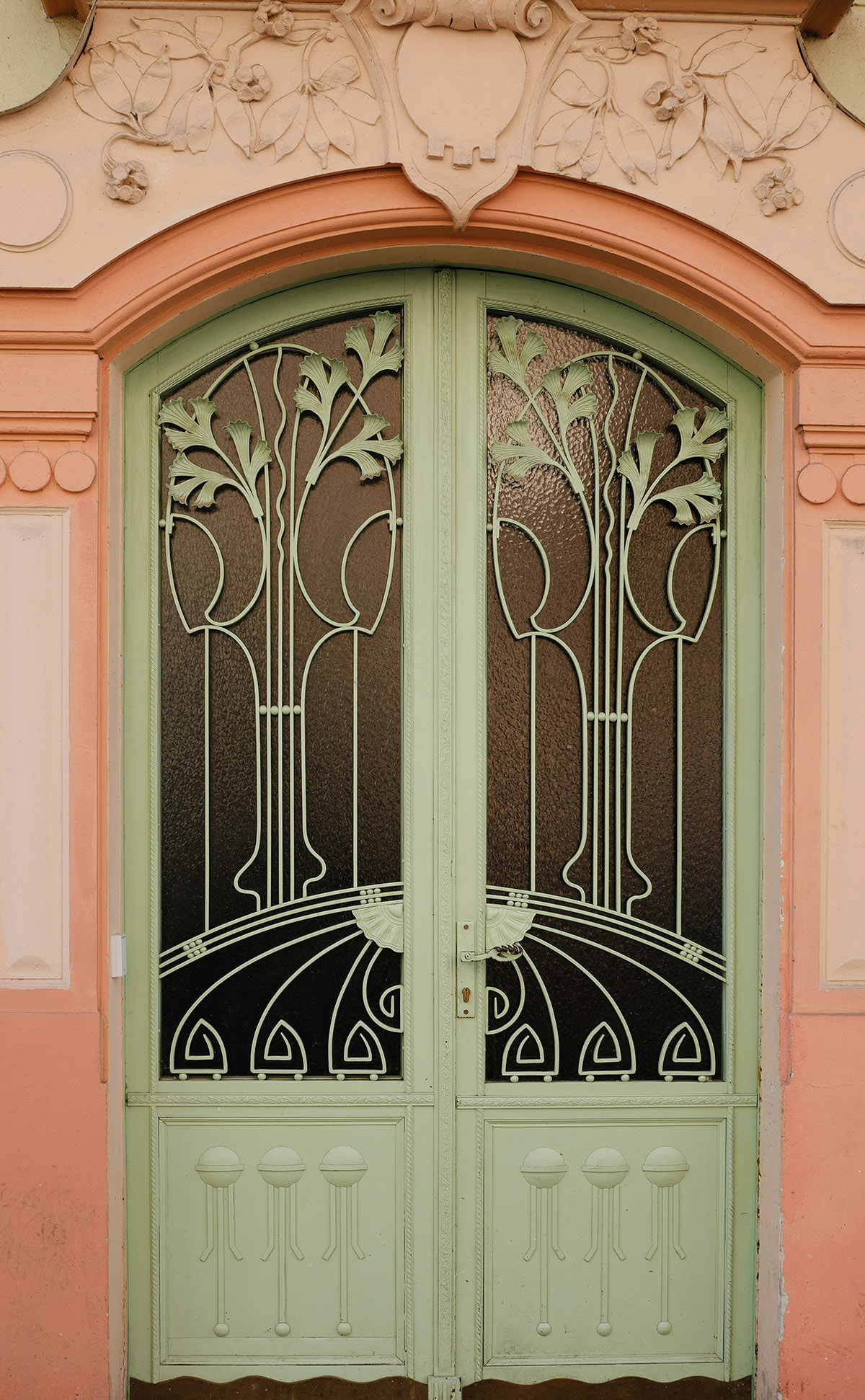

Discovering Art Nouveau
I first stumbled across Art Nouveau a couple of years ago, and it has stayed with me ever since. Once I discovered it, I found myself reading every design book from that period I could find. Fortunately, many of them are now in the public domain and can be found through places like Archive.org.
What I love most about Art Nouveau is not only that it features nature so heavily, but that it learns from nature. Vines, flowers, branches, insects, waves, and flowing hair were not simply copied as decoration. They were studied, stylized, and transformed into graceful lines, patterns, furniture, architecture, wallpaper, metalwork, glass, and everyday objects.

Many of the design principles used during this period did not originate with Art Nouveau alone. Ideas like symmetry, repetition, contrast, proportion, rhythm, unity, and repose have been used across many forms of art and design. But Art Nouveau brought them together in a particularly enchanting way: organic, ornamental, elegant, and alive.
See my post “How to See Your Home Like a Designer: Timeless Design Principles for a More Beautiful Home and Garden” for more on how to use design principles when decorating your home, planning your garden, arranging a table, creating a gallery wall, and more.
Taking Inspiration, Not Recreating the Past

In this post, we are not trying to recreate a historically perfect Art Nouveau home. Instead, we are taking inspiration from its spirit: its love of nature, craftsmanship, beauty, graceful line, and meaningful ornament. The goal is to translate those ideas into approachable choices we can use in real homes and gardens.
We’ll begin with the ideas that make Art Nouveau so inspiring: its reverence for nature, its seriousness about ornament and craftsmanship, and its belief that everyday objects can be made beautiful. Then we’ll move into ten simple ways to bring that inspiration into your own home and garden, from choosing a guiding mood or motif to adding graceful curves, natural materials, botanical art, handcrafted details, and more beautiful practical objects.
Before we get into the practical ideas, it helps to understand what Art Nouveau invites us to notice: that beauty can belong to ordinary life.
Taking Ornament Seriously Again

During the Art Nouveau period, beauty was not treated as something reserved for museums or grand houses. Ornament, craftsmanship, and decorative detail were taken seriously as part of daily life. This was partly a response to the Industrial Revolution and the rise of mass manufacturing. As more objects became machine-made, artists and designers began asking how beauty, skill, and artistic intention could remain part of everyday life.
A doorway, lamp, chair, wallpaper, stair rail, tile, or book cover could all become an opportunity for artistry. Art Nouveau did not draw a hard line between fine art and useful objects. Instead, it treated the things people lived with every day as worthy of beauty.

Today, ornament is often treated like decoration added at the end. In Art Nouveau, ornament was more integrated. The curve of a chair leg, the shape of a doorknob, the pattern of a tile, or the ironwork of a gate could all be designed to feel connected to the whole.

For a modern home, this could mean choosing or creating objects where beauty is part of the form: a mirror with a curved frame, a cabinet with carved detail, a painted lampshade, a floral rug, a stenciled wall border, a hand-painted tray, botanical drawer pulls, or a simple shelf with scalloped edging.
The Warmth of Handcrafted Details

One of the reasons handcrafted details feel so comforting is that they carry evidence of human attention. A hand-painted stencil, a refinished cabinet, a gathered bouquet, or a mended textile has a warmth that purely mass-produced decor often lacks.
A home does not need to be expensive to feel beautiful. It needs signs of care.
Nature as Motif, Symbol, and Story

Art Nouveau often used recognizable natural motifs: irises, lilies, poppies, vines, insects, peacocks, swans, shells, flowing hair, water, and branches. These were not just patterns. They gave objects a sense of symbolism, mood, and story.

In our own homes, we can borrow this same idea by choosing motifs, colors, and patterns with intention. Maybe that looks like a strawberry-themed kitchen, a room painted in your favorite color, artwork featuring a flower or tree you love, or a family heirloom placed where it can become the heart of the room. These choices do more than decorate a space. They help it speak. They tell the story of what we love, what we remember, and what we want to feel surrounded by every day.
The Beauty of Useful Things

Art Nouveau reminds us that beauty does not have to be saved for special occasions. The ordinary things we touch every day — a teacup, a cabinet handle, a curtain tieback, a notebook, a vase, a lamp — can become part of the atmosphere of home.

Instead of a plain plastic soap dispenser, use a small ceramic one. Instead of generic storage bins, use baskets, boxes, or fabric-covered containers. Instead of ignoring a hallway, add a framed botanical print, a little shelf, or a curved mirror. These small changes are simple, but they shift the feeling of daily life. They make the practical parts of home feel more cared for, more graceful, and more intentionally chosen.
The Home as a Living Composition
A more elevated concept from this period is the idea of designing the whole environment with care: architecture, furniture, textiles, lighting, metalwork, glass, garden, and objects all speaking the same visual language.

Rather than thinking of a room as separate purchases placed together, Art Nouveau encourages us to think of the home as a living composition. The wallpaper, furniture, lighting, plants, artwork, and handmade details can all echo one another.

This does not mean everything must match. It simply means the details should feel like they belong to the same story.
Simple Ways to Bring Art Nouveau-Inspired Beauty Home
1. Choose a Motif, Mood, or Guiding Feeling

Begin with something you genuinely love. It might be a recognizable motif, such as strawberries, roses, irises, vines, birds, bees, shells, or a favorite tree. But it could also be a mood: quiet, romantic, earthy, cheerful, refined, enchanted, airy, cozy, nostalgic, or fresh.
Not every room needs to be image-heavy. Sometimes the story of a room is told through color, pattern, texture, shape, and atmosphere. A kitchen might feel cheerful and abundant through warm cream walls, strawberry-red accents, woven baskets, and vintage floral dishes. A bedroom might feel soft and restful through muted colors, linen bedding, curved lamps, and delicate botanical artwork. A hallway might feel mysterious and intimate through deeper paint, an antique mirror, warm lighting, and a single framed print.

Before buying or making anything new, try choosing a few words that describe how you want the room to feel. Then use those words as a guide. If the words are romantic, garden-like, and soft, you might choose flowing curtains, floral details, curved shapes, and gentle colors. If the words are formal, ordered, and abundant, you might lean toward symmetry, structured planters, polished wood, brass accents, and classic patterns.
A simple mood board can help keep these choices connected. It does not need to be complicated. Save a few images, paint colors, fabric swatches, patterns, textures, and objects that capture the feeling you want. Then, when you are choosing a rug, lamp, cabinet pull, wallpaper, or thrifted piece, ask: Does this belong to the story I’m creating in this room?
Examples:
- a strawberry-themed kitchen
- a rose, iris, vine, bird, bee, shell, or tree motif
- a room guided by words like romantic, earthy, refined, cheerful, or enchanted
- a mood board with colors, textures, patterns, and inspiration images
- a favorite flower repeated through art, textiles, dishes, or small details
- a room color chosen because of the feeling it creates
2. Add Graceful Lines and Curves

Art Nouveau is famous for its graceful, flowing lines. You can borrow this feeling without adding obvious floral imagery by choosing pieces with curved, arched, scalloped, or vine-like forms. A round mirror, an arched cabinet, a lamp with a curved base, a scalloped shelf, draped curtains, or a winding plant stem in a vase can all soften a room and make it feel more alive.
Examples:
- arched mirrors
- curved lamps
- scalloped shelves
- rounded furniture
- vine-like stencils
- trailing houseplants
- draped curtains
- winding garden paths
- arbors, trellises, and curved gates
3. Let Small and Practical Details Carry Beauty

One of the most useful lessons we can take from Art Nouveau is that beauty can live in the small functional details. Hinges, knobs, handles, switch plates, curtain rods, shelf brackets, stair risers, drawer pulls, hooks, lampshades, towel bars, toilet paper holders, and door plates are easy to overlook because they are so practical. But these are often the very details we touch, see, and use every day.

A plain cabinet can feel more special with floral or antique-style drawer pulls. A staircase can gain charm from painted or stenciled risers. A bathroom can feel softer and more finished with a ceramic soap dish, graceful towel bar, vintage-style mirror, or prettier toilet paper holder. Even a switch plate or curtain rod can support the mood of a room when it is chosen with intention.
These little choices do not need to be expensive or dramatic. They simply remind us that beauty does not only belong in the obvious places. It can be woven into the practical parts of daily life.
Examples:
- ceramic soap dispenser
- baskets instead of plastic bins
- floral tray for keys
- fabric-covered storage boxes
- vintage dishes for everyday use
- cabinet knobs and drawer pulls
- hinges and door plates
- switch plates and outlet covers
- curtain rods and curtain rings
- shelf brackets and hooks
- painted or tiled stair risers
- towel bars and toilet paper holders
- lampshades and lamp finials
- air vents and grates
4. Add One Handcrafted or Upcycled Detail

You do not need to renovate an entire room. Sometimes one handmade detail is enough to make a space feel more loved: a painted mirror, a stenciled cabinet, a decoupaged tray, or a thrifted table given a second life.
This also fits beautifully with the Art Nouveau spirit because it brings attention, artistry, and care back into ordinary objects. A piece does not have to be rare or expensive to feel special. It can become meaningful because you chose it, altered it, repaired it, painted it, or gave it a new place in your home.
Examples:
- paint a thrifted mirror
- stencil a cabinet
- add scalloped trim to a shelf
- decoupage a tray
- frame pressed flowers
- paint a lampshade
- refinish a small table
- use peel-and-stick wallpaper inside a cabinet
- sew simple curtain ties from ribbon or scrap fabric
5. Add Beauty to the Edges

Sometimes a room does not need more things. It needs more attention to the edges: the frame around a mirror, the trim on a shelf, the border of a curtain, the edge of a table, the inside of a cabinet, or the line where wall meets ceiling. Art Nouveau often made these overlooked places beautiful through curves, borders, vines, carved details, and decorative outlines.
Edges are easy to ignore because they seem secondary, but they have a quiet influence on the whole room. A scalloped shelf, a decorative frame, a painted border, or a pretty curtain trim can make a space feel more finished without adding clutter.
Examples:
- scalloped shelf trim
- botanical wallpaper inside a cabinet
- painted border around a doorway
- decorative curtain trim
- antique frame around a mirror
- floral edge on dishes
- stenciled wall border
- carved or decorative furniture feet
- pretty brackets under shelves
6. Let Materials Feel Natural and Tactile

To bring in an Art Nouveau-inspired feeling, pay attention not only to pattern, but also to material. Wood, glass, brass, ceramic, linen, wicker, stone, clay, and aged metal all bring a sense of warmth and craftsmanship. These materials feel closer to the natural world than plastic or overly glossy finishes, and they help a room feel more grounded, human, and enduring.
This does not mean everything has to be antique or handmade. It simply means choosing materials that feel pleasant to touch, age gracefully, and support the mood of the room.
Ideas:
- wooden frames
- ceramic dishes
- linen curtains
- brass hooks
- wicker baskets
- glass vases
- stoneware crocks
- clay pots
- hand-thrown pottery
- antique or aged metal
7. Use Botanical Art in a More Thoughtful Way

Botanical art is one of the simplest ways to bring an Art Nouveau-inspired feeling into a home, but it feels more personal when it is chosen with care. Instead of choosing any floral print, look for plants that mean something to you: flowers from your garden, herbs you use often, trees that grow nearby, or plants associated with a favorite season or memory.
A botanical print can be pretty on its own, but it becomes more meaningful when it connects to your actual life. A framed fern might remind you of the woods near your home. A lavender print might belong in a restful bedroom. A strawberry illustration might make a kitchen feel cheerful and abundant. A pressed flower from your own garden can carry a memory no store-bought print ever could.
Ideas:
- public-domain botanical prints
- pressed flowers
- herbarium-style frames
- seed packet art
- antique floral book pages
- photos of your own garden
- artwork featuring local plants
- framed leaves, ferns, or grasses
8. Make Storage and Utility More Beautiful

Art Nouveau brought beauty into the useful objects of daily life: lamps, chairs, tiles, railings, dishes, book covers, and household fittings. Practical things were not treated as visual interruptions. They were opportunities for artistry.
We can borrow this idea by handling necessary objects beautifully. Storage, cleaning supplies, keys, mail, garden tools, toiletries, and everyday clutter do not have to ruin the atmosphere of a room. Baskets, trays, hooks, jars, crocks, fabric-covered boxes, and small cabinets can make practical things feel like part of the home rather than interruptions to it.

A ceramic crock for wooden spoons, a woven basket for garden gloves, a tray for keys and mail, or glass jars for pantry goods may seem simple, but these choices help ordinary routines feel more intentional and cared for.
Examples:
- basket for throws
- tray for mail
- ceramic crock for utensils
- glass jars for pantry goods
- floral box for paperwork
- vintage cabinet for shoes
- woven basket for garden gloves
- linen curtain to hide storage
9. Bring the Garden Indoors

Art Nouveau blurred the boundary between art and nature, and we can do the same in simple ways. Bring in branches, flowers, herbs, pressed botanicals, garden colors, and natural textures so the home feels gently connected to the world outside.
This can be especially beautiful when the home and garden echo one another. Flowers growing outside can appear in a vase, in artwork, or in a fabric pattern. Garden colors can inspire paint choices, pillows, dishes, or linens. Even a few herbs in the kitchen window can make the home feel more alive.
Examples:
- seasonal flowers in a vase
- branches in a pitcher
- pressed flowers
- botanical books on a table
- seed packets framed or displayed
- colors borrowed from the garden
- herbs in the kitchen window
- floral textiles that echo what grows outside
10. Bring Nature Indoors Seasonally

Art Nouveau’s love of nature does not have to appear only through wallpaper or furniture. It can also come through seasonal details: branches in spring, flowers in summer, seed heads in autumn, evergreens in winter, herbs in the kitchen, or pressed botanicals displayed throughout the year. These small changes help the home feel connected to the rhythm of the garden.
Seasonal decorating does not have to mean buying something new for every holiday. It can be as simple as noticing what the natural world is already offering and bringing a small piece of that beauty inside.
Examples:
- branches in a vase
- fresh flowers
- dried grasses
- pressed flowers
- herbs on the windowsill
- autumn seed pods
- evergreen clippings
- bowls of fruit
- seasonal wreaths
- garden cuttings in old bottles
Bringing Art Nouveau-Inspired Beauty into Daily Life

Taking inspiration from Art Nouveau does not mean turning your home into a museum or filling every surface with elaborate decoration. It means noticing where beauty can be woven into daily life. A curved mirror, a botanical print, a painted cabinet, a handmade curtain tie, a ceramic soap dish, a favorite flower repeated throughout a room, or a simple basket chosen with care can all become small acts of artistry.
At its heart, Art Nouveau reminds us that ordinary things can be made more graceful, more meaningful, and more alive. A home does not need perfection to feel beautiful. It needs care, intention, and details that tell a story.