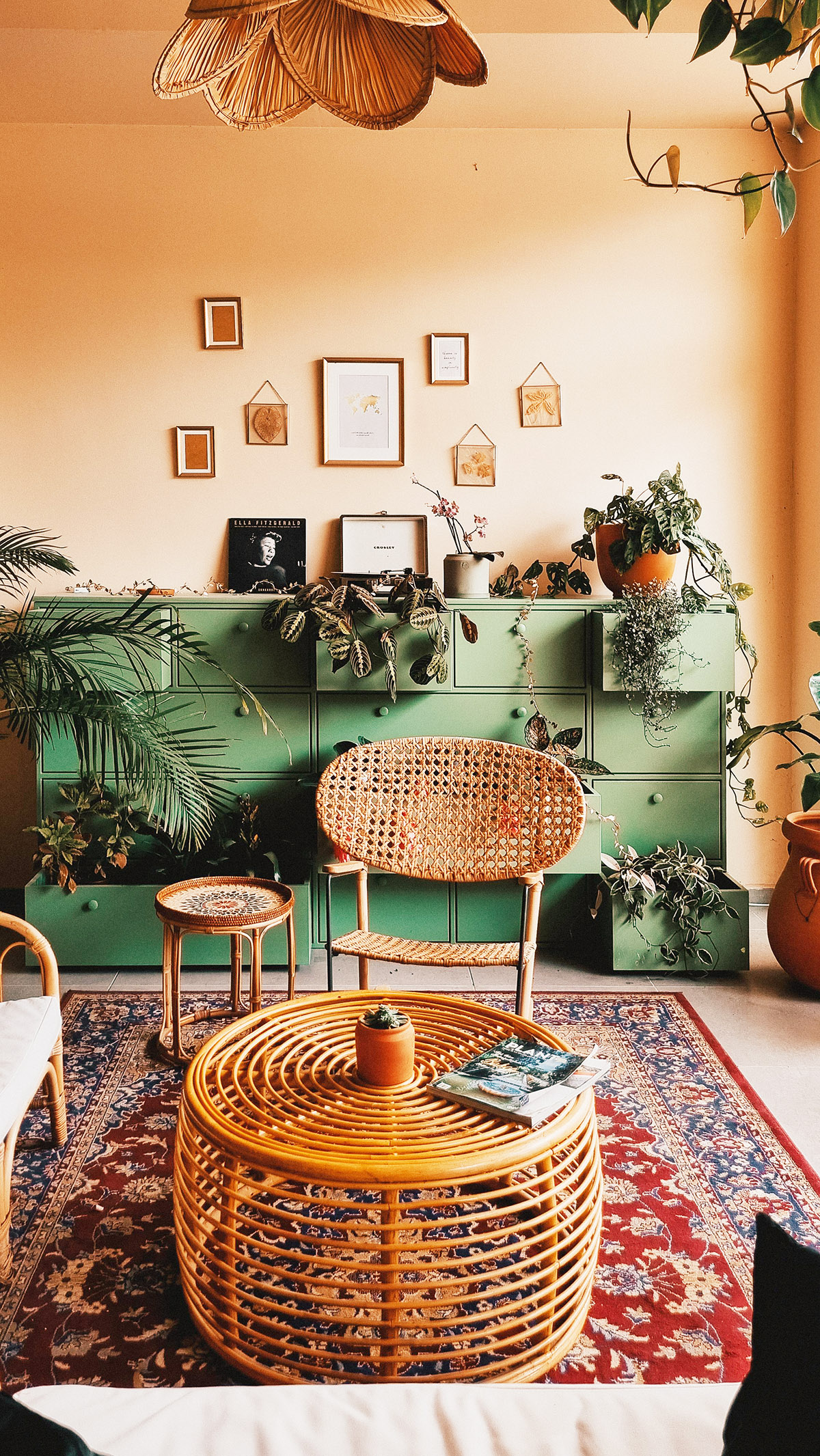

Some homes feel alive the moment we enter them.
They may not be perfectly decorated or especially grand. The furniture may have been collected slowly. Books might be stacked on a table. Flowers may be gathered from the yard rather than purchased. A project may be resting unfinished in one corner, while a blanket remains tossed over the back of a chair from the evening before.
Yet something about the space feels warm, expressive, and deeply inhabited.
A living home carries evidence of attention. It changes with the seasons, reflects the people who live there, and makes room for memory, beauty, work, rest, hospitality, and ordinary daily rituals. Its character develops gradually through the things we notice, preserve, arrange, repair, grow, and use.
Beauty helps create this feeling, but beauty alone is not enough. A room can be polished and still feel distant. Charm often comes from a more personal mixture: age beside newness, usefulness beside ornament, order beside a little irregularity, and carefully chosen details beside the natural traces of life.
Creating a more living home does not require decorating every surface or constantly buying something new. It begins with learning to recognize what gives a space presence, personality, and warmth.
1. Bring Something Living Into the Room

One of the simplest ways to make a room feel more alive is to introduce something that is actually living.
A houseplant, bowl of fruit, vase of garden clippings, jar of herbs, flowering branch, or tray of seedlings brings color and movement into the home. These natural elements subtly change from day to day. Leaves turn toward the light. Flowers open and fade. Fruit ripens. Cuttings develop roots. Branches cast shifting shadows across a wall.
Even a few stems can change the atmosphere of a room.
You might place:
- herbs on a kitchen windowsill
- a small plant beside the sink
- a flowering branch on a dining table
- clipped foliage in a bedside vase
- a bowl of lemons, pears, apples, or tomatoes on the counter
- a propagation jar near a sunny window
- seasonal flowers in an old bottle or pitcher
The arrangement does not need to be elaborate. A single leaf with an interesting shape can be enough to make a small corner feel noticed.
Living things also ask something of us. They need water, light, pruning, harvesting, or replacement. That gentle exchange helps the home feel tended rather than static.
2. Let the Home Reveal the People Who Live There

Character grows when a home contains visible signs of the people who belong to it.
Books, tools, photographs, artwork, collections, musical instruments, garden baskets, handmade objects, and works in progress all tell a story. They reveal what the household values, remembers, studies, creates, and enjoys.
This does not mean every possession needs to be displayed. Too much visible information can become tiring. Instead, choose a few objects that deserve to participate in the room.
You might display:
- books you return to often
- photographs connected with meaningful places or people
- pottery made by a friend
- shells, stones, feathers, or seed heads gathered on walks
- a child’s drawing in a beautiful frame
- old family objects that are still useful
- materials from a current craft or garden project
- an heirloom beside something modern
- a collection arranged as a small study
Personal objects give a room specificity. They help it feel rooted in one particular life rather than assembled from a general idea of what a beautiful home should look like.
3. Use Beautiful Things in Ordinary Life

Many lovely objects remain hidden because they seem too special for daily use.
The good dishes are saved for guests. The embroidered cloth stays folded in a drawer. The attractive pitcher is stored at the back of a cabinet. Candles wait for an occasion important enough to justify lighting them.
A living home allows beauty to enter ordinary routines.
Use the patterned cup for morning tea. Put water in the glass pitcher. Fold the cloth napkins beside a simple meal. Place fruit in the old serving bowl. Use the basket to carry laundry, the silver tray to hold perfume, or the ceramic dish to collect keys.
Useful beauty becomes part of the rhythm of the household. It is touched, moved, washed, repaired, and remembered.
This kind of use may eventually leave wear, but wear can become part of an object’s story. A wooden table gains marks. Linen softens. Brass darkens. A favorite mug develops a small chip. These changes can make a home feel more intimate because they show that its beauty has been lived with.
4. Add Something With Age

New objects can be beautiful, but age often brings a depth that cannot be manufactured quickly.
Old wood, worn metal, faded fabric, handmade pottery, antique mirrors, vintage frames, and secondhand furniture introduce texture, history, and visual contrast. Their irregularities help soften rooms that otherwise feel too uniform or newly assembled.
You do not need to furnish the entire home with antiques. One older element may be enough.
Consider adding:
- a weathered stool
- an old mirror
- a vintage landscape or botanical print
- a worn wooden box
- an aged brass candlestick
- a secondhand side table
- an old basket
- inherited dishes
- a framed piece of fabric or embroidery
- architectural salvage used as decoration
Older objects often carry a sense of continuity. They remind us that the home belongs to a longer story of making, repairing, gathering, and passing things forward.
5. Allow Materials to Feel Like Themselves

Rooms gain life when materials retain some of their natural character.
Wood can show grain and knots. Linen can wrinkle. Clay can carry the marks of the maker’s hand. Stone can remain uneven. Metal can patinate. Woven fibers can vary slightly in color and thickness.
These qualities give the eye something to explore.
Highly smooth, uniform surfaces may create calm, but too many of them can leave a room feeling flat. Natural and tactile materials introduce variation without requiring bold color or elaborate decoration.
You might incorporate:
- linen or cotton curtains
- wool blankets
- woven baskets
- unfinished or lightly finished wood
- handmade ceramics
- stoneware
- aged metal
- rattan, cane, or rush
- dried grasses
- textured plaster or limewash
- natural paper
- branches, bark, shells, and stones
The goal is not to create a particular style. It is to let texture contribute to the atmosphere of the home.
6. Create Small Moments of Surprise

Charm often appears where we do not expect it.
A tiny painting inside a bookshelf. A flower placed beside the sink. Wallpaper lining the back of a cabinet. A decorative knob on an ordinary drawer. A small framed print in the bathroom. A ribbon tied around a stack of letters.
These details make a home feel imaginative.
Try adding beauty to a place that is usually overlooked:
- inside a pantry or cupboard
- beside a staircase
- above a doorway
- near the laundry area
- inside a closet
- on the back of a door
- beside a light switch
- along a windowsill
- on a small landing
- near the place where shoes are removed
A surprising detail does not need to call attention to itself from across the room. Part of its pleasure comes from being discovered.
7. Soften the Practical Parts of the Home

Every home contains objects that are necessary but not especially attractive.
Cleaning supplies, cords, bins, remotes, pet items, mail, toiletries, garden tools, and everyday containers can easily interrupt the feeling of a room. Hiding everything is rarely practical, but many useful areas can be made gentler and more intentional.
You might:
- place frequently used items on a tray
- transfer supplies into simple labeled jars
- use a basket to gather loose objects
- hang attractive tools where they are easy to reach
- choose a ceramic dish for soap
- store blankets in a woven basket
- use a wooden box for remotes
- group bottles rather than scattering them
- add a small picture or flower near a practical station
- conceal cords where possible
Order is helpful, but the deeper goal is to make daily life feel supported. When useful things have a clear home, rooms become easier to care for and more pleasant to inhabit.
8. Let Light Shape the Atmosphere

Light has a powerful influence on whether a home feels flat, restful, cheerful, intimate, or alive.
During the day, notice how natural light moves through each room. A mirror may reflect it into a darker corner. A sheer curtain may soften it. A branch or plant may create delicate shadows. A chair may feel more inviting when turned slightly toward a window.
In the evening, one strong overhead light can erase much of a room’s depth. Several lower sources of light create a softer and more layered atmosphere.
Consider using:
- table lamps
- floor lamps
- candles
- wall lights
- small lamps on kitchen counters
- lights inside shelves or cabinets
- lanterns
- string lights used sparingly
- warm bulbs
- shaded lamps that direct light downward
Light can also establish small zones within a room. A lamp beside a chair creates a place to read. A candle on the table turns an ordinary meal into a moment. A light near the entry makes returning home feel more welcoming.
9. Add Movement

Living spaces rarely feel entirely still.
Curtains shift near an open window. Leaves move in the light. A mobile turns gently. Steam rises from a cup. Reflections change across a mirror. Shadows travel across the wall as the day passes.
Movement brings subtle energy into a room.
You can encourage it through:
- lightweight curtains
- hanging plants
- branches with fine leaves
- mobiles or suspended ornaments
- mirrors
- glass objects that catch light
- prisms or sun catchers
- candles
- fabric draped rather than tightly arranged
- flowers with loose, arching stems

Even patterns can suggest movement. Curving vines, flowing lines, scattered florals, and irregular stripes guide the eye through a space and keep it from feeling rigid.
10. Display Signs of the Season

A living home changes.
It does not need to be completely redecorated every few months, but small seasonal adjustments help the home remain connected to the world outside.
In spring, you might bring in budding branches, wash lighter curtains, or place seed packets near the garden door. Summer may bring bowls of berries, linen textiles, herbs, shells, and flowers. Autumn might introduce apples, dried seed heads, deeper colors, candles, and wool. Winter may call for evergreen branches, warm drinks, heavier blankets, stored bulbs, and softer light.
Seasonal details could include:
- flowers or branches
- produce
- herbs
- textiles
- artwork
- books
- scents
- candles
- natural collections
- garden materials
- objects associated with seasonal rituals
These changes do not need to look like formal holiday decorating. They can simply reflect what is happening now.
11. Make Room for Things in Progress

A living home is rarely finished.
There may be seeds waiting to be planted, fabric ready to be sewn, flowers being pressed, a chair waiting for repair, notes for a future project, or books gathered around a subject of interest.
When every project must disappear completely between uses, creativity can become harder to sustain. It may help to give works in progress a visible but contained place.
Use:
- a basket for current mending
- a tray for small craft materials
- a cabinet shelf for unfinished projects
- a table where a puzzle or sketchbook can remain
- a folder for inspiration
- hooks for tools
- a jar for garden labels
- a box for pressed flowers
- a designated corner for materials being gathered
The intention is not to let unfinished tasks take over the room. It is to acknowledge that making, learning, and tending are part of the life of the home.
12. Let Some Things Be Imperfect

Charm often depends on irregularity.
A handmade bowl may be slightly uneven. A gallery wall may include frames that do not match. Flowers may lean in different directions. A repaired textile may show its stitching. A table may carry scratches from years of meals and projects.
Perfect repetition can create order, but a little variation creates personality.
When everything is coordinated too carefully, the room may begin to feel cautious. Try allowing one element to remain loose, surprising, aged, or handmade.
This could mean:
- mixing old and new frames
- using mismatched dishes
- allowing flowers to fall naturally
- keeping a visible repair
- choosing a handmade object with irregular edges
- combining formal and rustic pieces
- arranging books in more than one way
- accepting the natural wear of a well-used object
Imperfection can help a home feel generous. It gives people permission to touch things, sit comfortably, and participate in the room.
13. Create Places That Invite a Particular Kind of Life

A home becomes more alive when its arrangement supports the life you hope to live within it.
A chair beside a lamp invites reading. A table near the window invites breakfast, drawing, writing, or conversation. A basket of blankets encourages people to stay outside after sunset. A bench near the door makes it easier to remove muddy shoes. A vase and pair of clippers near the garden entrance make gathering flowers more likely.
Think about what you want to happen in a space.
Do you want people to linger? Read more? Gather for meals? Make things? Spend time outdoors? Notice the garden? Write letters? Rest without turning on a screen?
Then create a small physical invitation.
You might prepare:
- a tea tray
- a reading chair
- a writing corner
- a small outdoor table
- a basket of art supplies
- a garden bench
- a place for morning coffee
- a shelf of frequently used cookbooks
- a table ready for flowers or seasonal displays
- a comfortable place for conversation
Rooms influence habits. Even a small adjustment can make a desired activity easier to begin.
14. Notice What the Home Is Asking For

Sometimes a room does not need another object. It needs space, repair, warmth, contrast, softness, light, or a clearer purpose.
Before buying something, spend time observing.
Ask:
- Does the room feel too empty or too crowded?
- Is there enough light where people actually sit?
- Are the most meaningful objects visible?
- Is anything beautiful hidden but useful?
- Does the room need more texture?
- Is there a place for something living?
- Are practical items creating visual noise?
- Is there evidence of the people who live here?
- Does the space support how we want to use it?
- What feels neglected?
A home develops character through response. We notice what is missing, what is no longer working, and what wants to be brought forward.
Sometimes the answer is a lamp, plant, painting, or textile. Sometimes it is removing something. Sometimes it is repairing a broken drawer, clearing a chair, washing a window, or bringing an old object back into use.
A Home That Continues to Become

A living home is never entirely complete.
It grows through seasons, routines, relationships, repairs, discoveries, and changing needs. Its beauty gathers slowly through repeated acts of attention.
Flowers are brought inside. Books accumulate beside a chair. A table gains marks from meals and projects. A handmade object finds a place beside something inherited. Curtains fade slightly in the sun. Rooms change as children grow, interests develop, guests arrive, and daily life asks for something new.
Character cannot always be purchased at once because much of it comes from use, memory, and time.
Begin with one corner. Bring in a branch. Frame something meaningful. use the beautiful bowl. Soften a practical area. Light a lamp before evening. Place a chair where the light is best. Allow one small detail to be unexpected.
A living home is created through these quiet choices.
It becomes beautiful because it is noticed, expressive because it is personal, and full of character because life has been allowed to leave its mark.
The overall structure gives you many flexible photo options while still maintaining a strong central thread. It could also support affiliate links naturally later through lighting, baskets, frames, textiles, trays, planters, and decorative hardware.